
SCP-1166 is an anomalous laboratory rat with human-equivalent intelligence and emotional capacity that resurrects itself approximately 15 minutes after death. Designated as the “Perfect Lab Specimen,” it reacts to all chemicals and medical conditions exactly as a human would, making it scientifically invaluable yet ethically catastrophic for the Foundation.
The Biological Paradox: Anatomy of an Immortal Rat
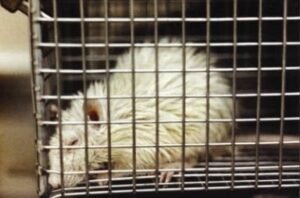
SCP-1166 appears as an ordinary Rattus norvegicus (common lab rat) with standard physical dimensions and no visible external anomalies. What separates this creature from baseline rodents is its unprecedented regenerative cycle. Upon death from any cause—chemical exposure, surgical trauma, disease, or physical injury—the specimen’s body remains inert for 12-18 minutes before spontaneously resurrecting with full restoration of all biological functions.
Unlike known regenerative organisms such as axolotls (which regrow limbs through blastema formation) or planarians (which regenerate via neoblast stem cells), SCP-1166’s resurrection defies conventional biological mechanisms. Tissue samples taken post-mortem show complete cellular death with no detectable metabolic activity. Yet the organism returns to life with intact memories, personality continuity, and zero physical degradation from previous deaths.
The specimen’s internal biology mirrors human physiology at a pharmacological level. Drug metabolism rates, receptor binding affinities, and toxic dose thresholds align with human parameters rather than rodent baselines. A substance lethal to humans at 50mg/kg proves equally lethal to SCP-1166 at the same dosage—despite the creature weighing only 300 grams. This proportional response violation suggests the anomaly operates on principles beyond conventional biochemistry.
Human-Level Cognition in a Rodent Body
Behavioral assessments reveal SCP-1166 possesses cognitive abilities equivalent to an adult human with average intelligence. The specimen demonstrates problem-solving skills far exceeding normal rodent capacity, including tool use, pattern recognition across multiple sensory modalities, and apparent understanding of cause-and-effect relationships in experimental contexts.
Most disturbing are the documented emotional responses. Video surveillance captures behaviors consistent with anticipatory anxiety before scheduled experiments, depression-like symptoms following particularly traumatic deaths, and what researchers interpret as resignation or learned helplessness after prolonged testing periods. The specimen has been observed attempting to hide, displaying stress vocalizations outside normal rat frequency ranges, and exhibiting what appears to be grief responses lasting several hours post-resurrection.
Foundation psychologists debate whether SCP-1166 possesses true self-awareness or simply mimics human emotional patterns as part of its anomalous properties. Either interpretation raises profound questions about the nature of consciousness and whether the Foundation’s treatment of the specimen constitutes torture of a sentient being.
Classification & Containment Protocol
Object Class: Safe
SCP-1166 receives Safe classification not due to benevolence but predictability. The specimen poses no threat to personnel, cannot breach containment through its own actions, and requires only standard laboratory housing. The classification reflects containment ease rather than ethical simplicity.
Current protocols house SCP-1166 in a modified vivarium at Site-██’s Biological Research Wing. The enclosure includes environmental enrichment items, though researchers note the specimen shows limited interest in typical rat activities. A rotating schedule of handlers prevents emotional attachment, and all experimental procedures require Level 3 authorization with mandatory Ethics Committee review for protocols involving extended suffering.
The containment philosophy balances research utility against ethical concerns. Unlike disposable D-Class personnel, SCP-1166 cannot be “used up” and replaced, creating institutional pressure to maintain the specimen’s psychological stability for long-term experimental value.
The Ethics Nightmare: Why SCP-1166 Divides the Foundation
SCP-1166 represents the Foundation’s ethical contradictions in concentrated form. The Research Division views it as humanity’s greatest medical research tool—a subject that can test lethal compounds, survive terminal procedures, and provide data impossible to obtain through human trials or animal models. Breakthroughs in toxicology, surgical techniques, and pharmaceutical development have saved thousands of lives using knowledge gained from SCP-1166’s suffering.
The Ethics Committee maintains that subjecting a sentient, emotionally aware being to repeated death constitutes a violation of the Foundation’s core principles. Internal documents reveal heated debates about whether immortality negates harm—if the specimen always returns to baseline physical health, does the psychological trauma matter? Can an entity that cannot permanently die truly suffer?
Some researchers argue SCP-1166’s existence is itself a containment failure of human morality. The specimen’s perfect human-equivalent responses mean every experiment conducted on it could theoretically be conducted on a human subject with identical results. The only difference is SCP-1166 resurrects, allowing the Foundation to repeat the process indefinitely.
This philosophical deadlock has led to compromise protocols limiting “high-trauma” experiments to cases where human lives directly hang in the balance, though critics note this standard remains subjectively enforced.
Research Applications & Experimental History
SCP-1166’s designation as “Perfect Lab Specimen” stems from its unparalleled research applications. The anomaly has been instrumental in developing antidotes for previously untreatable toxins, refining surgical procedures too dangerous for human trials, and testing experimental medications that would require decades of conventional research.
Notable experimental milestones include the development of Protocol Lazarus-7 (a resuscitation technique for extreme hypothermia), identification of the LD50 for 47 anomalous compounds, and successful trials of regenerative therapies later adapted for human use. Each breakthrough came at the cost of SCP-1166’s repeated deaths—the specimen has died and resurrected over 3,000 times since containment began.
Researchers report the specimen’s behavior has changed over time. Early experiments showed typical fear responses and escape attempts. Current observations note a disturbing passivity, with SCP-1166 offering no resistance to procedures and displaying what behavioral specialists term “profound learned helplessness.” The specimen appears to understand the futility of resistance, raising questions about whether its psychological state has deteriorated beyond recovery.
Cross-Reference Analysis: Similar Anomalies
SCP-1166 shares thematic elements with other resurrection-based anomalies, though its mechanism remains unique. Unlike SCP-008 (which creates mindless reanimated corpses) or SCP-2718 (which involves consciousness persistence after death), SCP-1166 returns to complete baseline functionality with continuity of self.
The specimen’s human-equivalent responses suggest possible artificial creation rather than natural occurrence. Some researchers theorize SCP-1166 may be a prototype for SCP-████, a failed attempt at creating disposable human test subjects, or the result of a reality-bending event that merged human consciousness with rodent biology.
Fan theories within the Foundation community speculate about connections to the Church of the Broken God (biomechanical resurrection) or Sarkic cults (flesh manipulation), though no evidence supports these links. The specimen’s origin remains classified or unknown.
Frequently Asked Questions
Can SCP-1166 die permanently?
No method has successfully prevented SCP-1166’s resurrection. Complete incineration, dismemberment, chemical dissolution, and even exposure to reality-altering anomalies result in the specimen’s return after 12-18 minutes. The Foundation has not attempted certain extreme measures (such as exposure to SCP-2935) due to ethical concerns and fear of unpredictable consequences.
Does SCP-1166 age normally?
The specimen shows no signs of aging since initial containment in 20██. Cellular analysis indicates biological age remains constant at approximately 6 months (young adult for laboratory rats). Whether this represents true biological immortality or simply extremely slow aging remains under investigation.
Why doesn’t the Foundation use SCP-1166 for all medical research?
Practical limitations include the specimen’s singular nature (only one exists), the time required between lethal experiments (minimum 15 minutes), and growing ethical resistance within the Foundation. Additionally, some research requires multiple simultaneous subjects or long-term observation impossible with a single immortal specimen.
Has SCP-1166 ever attempted communication?
The specimen lacks the physical apparatus for human speech and has not demonstrated written communication abilities despite apparent human-level intelligence. Researchers debate whether this represents a cognitive limitation or unwillingness to engage with captors. Recent proposals suggest teaching the specimen sign language, though Ethics Committee approval remains pending.
What happens if SCP-1166 escapes containment?
Given its Safe classification and lack of hostile capabilities, escape poses minimal threat to normalcy. The primary concern involves public discovery of an immortal, sentient laboratory animal, which could compromise the Foundation’s secrecy and trigger animal rights investigations. Recapture protocols emphasize discretion over force.