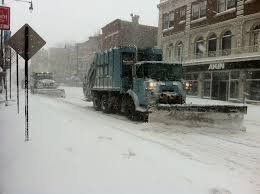
SCP-5675 is a cognitohazardous phenomenon affecting residents of Chicago’s Douglas neighborhood, causing extreme psychological terror in response to garbage collection vehicles. The anomaly manifests as a perception-altering effect that transforms routine sanitation trucks into sources of overwhelming dread, triggering panic attacks, paranoia, and violent avoidance behaviors in affected individuals.
The Douglas Neighborhood Incident: What Happened That Night
The SCP-5675 phenomenon emerged suddenly in Chicago’s Douglas neighborhood, a historically significant area on the city’s South Side. Residents began reporting inexplicable terror responses to the appearance of standard municipal garbage trucks during their regular collection routes. What started as isolated complaints of unease rapidly escalated into a community-wide crisis.
Witnesses described overwhelming sensations of dread upon hearing the hydraulic compressors or seeing the vehicles approach. Some residents barricaded themselves indoors, while others fled their homes entirely. Emergency services received dozens of calls reporting panic attacks, with several individuals requiring hospitalization for acute anxiety episodes. The Foundation’s Chicago field office identified the pattern after local law enforcement flagged the unusual concentration of psychological distress calls correlating with sanitation schedules.
Initial containment efforts focused on establishing the geographic boundaries of the effect and identifying patient zero. The anomaly appeared confined to a specific radius within Douglas, with effects diminishing sharply at neighborhood borders. This localized nature suggested an origin point rather than a spreading contagion, leading investigators to search for a catalyzing event or individual.
The Cognitohazard Mechanism: How Fear Becomes Reality
SCP-5675 operates as a perception-based anomaly that rewrites the cognitive interpretation of garbage trucks within affected individuals. Unlike traditional phobias that develop through conditioning or trauma, this cognitohazard bypasses normal fear acquisition pathways and directly implants terror responses in the limbic system.
The mechanism shares characteristics with other memetic SCPs, particularly those in the Class-C cognitohazard category. Affected individuals report that garbage trucks appear “wrong” or “threatening” in ways they cannot articulate. Neurological scans of exposed subjects show abnormal amygdala activation patterns consistent with immediate threat perception, despite conscious awareness that the vehicles pose no danger.
The specificity of the trigger—garbage trucks rather than all vehicles or machinery—suggests intentional targeting rather than random manifestation. Foundation researchers theorize the anomaly exploits existing urban anxieties about waste, decay, and the liminal spaces of city infrastructure. Garbage trucks occupy a unique psychological position as necessary but unwelcome presences, making them ideal vectors for amplified dread.
Comparative analysis with SCP-3125 and SCP-2719 reveals similar reality-perception distortion mechanics, though SCP-5675 operates on a far more localized scale. The anomaly doesn’t alter physical reality but fundamentally changes how affected brains process sensory information related to its trigger object.
Person of Interest: Robert Brigham and the Ritual Connection
Robert Brigham Jr., designated PoI-5675, emerged as the primary suspect through triangulation analysis of the anomaly’s epicenter. A Douglas neighborhood resident with documented interest in thaumaturgy and amateur occult practices, Brigham’s apartment sat at the geometric center of the highest-intensity effect zone.
Foundation interviews revealed Brigham had been experimenting with ritual magic derived from corrupted Sarkic texts and urban folklore compilations. His journals contained references to “cleansing the neighborhood” and “banishing the collectors,” suggesting he viewed garbage trucks as symbolic representations of urban decay or spiritual contamination. The ritual he performed on the night of the incident apparently intended to create a protective ward against what he perceived as negative energy.
Instead, Brigham’s thaumaturgic working backfired catastrophically. His lack of proper training and use of incomplete ritual frameworks resulted in an uncontrolled manifestation that weaponized his personal anxieties about waste and urban infrastructure. The cognitohazard essentially broadcast his phobic response across the neighborhood, creating a shared psychological contamination.
Whether Brigham possessed genuine thaumaturgic ability or accidentally tapped into existing ley line energy remains debated within Foundation circles. His subsequent cooperation with containment efforts and genuine remorse suggest the effect was unintentional, though this doesn’t diminish the severity of the breach.
Containment Philosophy: Managing a Neighborhood’s Collective Psychosis
Containing SCP-5675 presents unique challenges because the anomaly exists primarily in human perception rather than physical space. Traditional containment protocols designed for objects or entities prove inadequate when the threat is a shared cognitive distortion affecting an entire community.
The Foundation’s approach combines several strategies. Class-B amnestics administered to affected residents remove memories of the terror episodes but don’t eliminate the underlying cognitohazard susceptibility. Behavioral conditioning protocols attempt to desensitize subjects through controlled exposure, though success rates remain inconsistent. The most effective measure involves rerouting garbage collection to avoid the affected area entirely, essentially containing the anomaly through avoidance rather than neutralization.
This raises significant ethical questions about the Foundation’s mandate. Altering an entire neighborhood’s memories and municipal services to manage one individual’s magical accident represents substantial interference in civilian life. The O5 Council authorized these measures under the principle that preventing mass panic and potential casualties outweighs concerns about autonomy.
Long-term containment requires maintaining the fiction that Douglas neighborhood receives normal sanitation services while actually using unmarked vehicles during off-hours. Foundation personnel embedded in Chicago’s Department of Streets and Sanitation ensure compliance. Residents who move into the affected area receive preventative amnestic treatment disguised as routine water fluoridation.
The containment also monitors PoI-5675 continuously to prevent repeat incidents and studies his thaumaturgic methods to develop countermeasures against similar amateur occult accidents.
Information Gain: The Thaumaturgic Accident Theory
SCP-5675 represents a growing category of anomalies: unintentional reality distortions caused by untrained practitioners accessing genuine thaumaturgic forces. The democratization of occult knowledge through internet forums and digitized grimoires has created a population of amateur magicians who lack the institutional safeguards that historically prevented such accidents.
Chicago’s position as a nexus of intersecting ley lines may have amplified Brigham’s ritual beyond its intended scope. The city sits at the confluence of several major thaumaturgic currents, making it a hotspot for both intentional and accidental anomalous activity. Foundation records document at least seven other Chicago-based SCPs with ritual origins, suggesting the city’s metaphysical geography makes it particularly susceptible to this type of manifestation.
The garbage truck specificity invites deeper analysis of urban folklore and modern mythology. In contemporary American cities, sanitation workers occupy a liminal social position—essential but invisible, associated with waste and the abject. Anthropological research suggests garbage trucks function as modern psychopomps, ferrying away the unwanted and maintaining boundaries between clean and unclean spaces. Brigham’s ritual may have tapped into this collective unconscious symbolism, transforming garbage trucks from mundane infrastructure into genuine objects of supernatural dread.
Fan theories within the SCP research community speculate that SCP-5675 isn’t truly contained but merely dormant. Some researchers argue the cognitohazard has embedded itself in the neighborhood’s collective unconscious and could reactivate if triggered by similar thaumaturgic activity or if the containment protocols lapse. Others suggest Brigham’s ritual opened a permanent weak point in local reality that continues to leak low-level anomalous effects, explaining persistent reports of unease in the area even among amnesticized residents.
Frequently Asked Questions
Is SCP-5675 dangerous to people outside Douglas neighborhood?
The cognitohazard appears geographically bound to a specific radius within Chicago’s Douglas neighborhood. Individuals who leave the affected area experience rapid symptom reduction, and those who were never exposed show no susceptibility when encountering garbage trucks elsewhere. The Foundation maintains monitoring stations at neighborhood boundaries to detect any expansion of the effect zone.
Can SCP-5675 be permanently neutralized?
Current containment focuses on management rather than elimination because the anomaly exists as a perception-based effect rather than a physical entity. Attempts to perform counter-rituals have shown limited success. The Foundation’s Thaumatology Department continues researching neutralization methods, but the priority remains preventing exposure and managing affected individuals.
What happened to Robert Brigham after the incident?
PoI-5675 remains in Foundation custody under supervised containment. He cooperates with researchers studying thaumaturgic accident prevention and has provided valuable insights into amateur occult practices. His case serves as a cautionary example in Foundation training materials about the dangers of unsupervised reality-bending attempts.
Are there other SCPs similar to SCP-5675?
Several anomalies share characteristics with SCP-5675, including perception-altering cognitohazards and ritual-origin phenomena. SCP-3125 represents a more aggressive memetic threat, while SCP-2719 demonstrates reality-perception distortion on a conceptual level. The Foundation’s Memetics Division maintains a database of related anomalies for comparative research.
Why garbage trucks specifically?
The specificity likely stems from PoI-5675’s personal associations and the symbolic weight garbage trucks carry in urban environments. Thaumaturgic rituals often manifest based on the practitioner’s subconscious fears and cultural context. Garbage trucks represent removal, waste, and the boundary between civilization and decay—powerful symbolic elements that amplified the ritual’s unintended effects.