Executive Summary
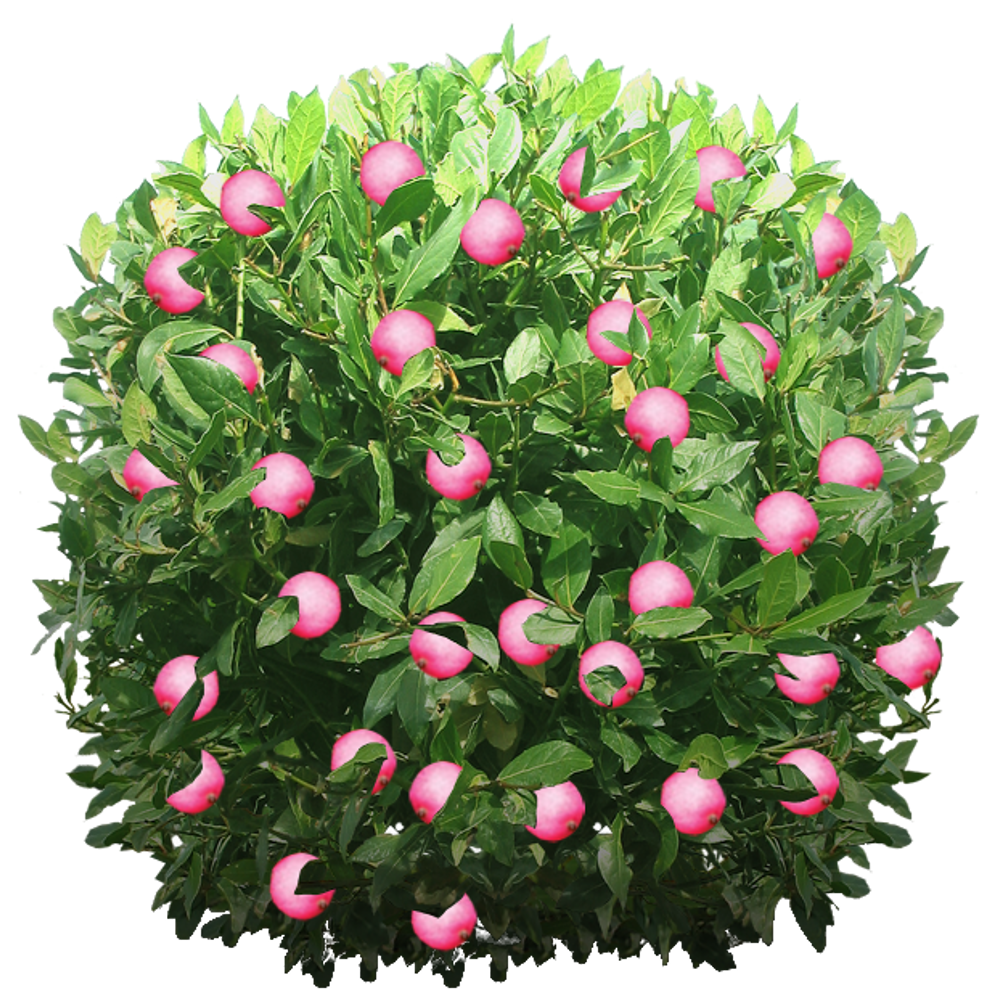
SCP-324, known as the “Eulogy Shrub,” is a Safe-class anomalous evergreen that produces memory-containing berries (SCP-324-1) when its root system contacts deceased mammals. When consumed, these berries allow individuals to experience vivid, first-person memories from the deceased’s life, effectively transforming decomposing neural tissue into edible consciousness. This necro-botanical anomaly raises profound questions about the physical substrate of memory and the commodification of human experience.
The Botanical Profile: What Makes SCP-324 Unique
SCP-324 defies conventional botanical classification not through its physical appearance—which resembles an unremarkable evergreen shrub standing 1.4 meters tall—but through its extraordinary reproductive trigger mechanism. Unlike typical flowering plants that respond to seasonal light cycles or temperature changes, SCP-324’s flowering phase activates only when specific necromantic conditions are met.
The shrub’s extensive root system, reaching 2.5 meters below the soil surface, functions as a biological sensor network. It requires contact with a deceased mammal of at least 25 kilograms that has been dead for no more than three days. This narrow window suggests the anomaly targets a specific stage of cellular decomposition—likely when neural tissue remains sufficiently intact for information extraction but has begun breaking down its cellular barriers.
Once triggered, SCP-324 produces small white flowers with an unusual nine-petal configuration within sixteen hours. Within seventy-five hours, these flowers mature into pinkish-white berries (SCP-324-1) measuring 9-14 millimeters in diameter. Consumers describe the taste as “tart and mildly sweet”—an almost cruel irony given the profound psychological experience that follows ingestion.
The production cycle lasts approximately one week regardless of the cadaver’s mass, suggesting SCP-324 extracts a finite “harvest” of memory data rather than continuously feeding on decomposing tissue. After this period, all berries wither simultaneously, and the shrub returns to dormancy until another suitable corpse enters its root zone.
The Memory Harvest Mechanism: How Dead Thoughts Become Fruit
The process by which SCP-324 converts neural information into consumable form represents one of the Foundation’s most perplexing biological mysteries. Current theories suggest the root system secretes specialized enzymes that penetrate decomposing brain tissue, somehow “reading” the electrochemical patterns that encoded memories during life.
When a consumer ingests SCP-324-1, they experience a 2-4 minute sensory episode that feels indistinguishable from their own memories—except they consciously recognize it as foreign. Test subjects report complete sensory immersion: visual details, ambient sounds, emotional states, even proprioceptive sensations like the weight of a child’s body or the pressure of water during a dolphin’s swim.
The fidelity of human memories far exceeds animal experiences. Human consumers report coherent narratives with contextual understanding—a picnic scene includes not just visual data but the implicit knowledge of familial relationships and the cultural significance of the moment. Animal memories, by contrast, manifest as “overwhelming jumbles of sensory input” lacking narrative structure. This distinction reveals something fundamental about consciousness: human memory isn’t merely recorded sensation but interpreted experience, filtered through language and self-awareness.
The dolphin experiment (Log 324-45.2) proved particularly revealing. D-39395 instinctively held her breath for ninety-seven seconds—her body responding to the memory’s environmental context—and reported “speaking” to another individual despite being unable to recall the conversation’s content. This suggests SCP-324 transmits not just sensory data but species-specific cognitive frameworks, including echolocation-based communication that human neurology cannot properly decode.
Multiple berries consumed simultaneously don’t create overlapping experiences but queue sequentially, each maintaining its full 2-4 minute duration. This implies the anomaly’s effect operates through a neurological mechanism with built-in processing limitations, rather than a purely supernatural information transfer.
The New Hampshire Discovery: Declan’s Grief Business
SCP-324 came to Foundation attention through one of the more ethically disturbing civilian exploitation cases on record. In rural New Hampshire, groundskeeper Declan █████ had transformed a “natural burial” cemetery—a growing movement emphasizing ecological decomposition over embalming and metal caskets—into a macabre memory tourism operation.
The natural burial context is crucial to understanding how SCP-324 remained undetected. These cemeteries deliberately place bodies in direct soil contact without coffins or preservation chemicals, creating ideal conditions for the shrub’s root system to access fresh cadavers. Declan would strategically transplant SCP-324 to new grave sites and invite grieving families to consume the berries for “substantial fees,” marketing the experience as a final communion with their loved ones.
The operation’s discovery was almost accidental. Agent ████████, attending services for his deceased ██████, was offered the berries as part of the cemetery’s “premium remembrance package.” His Foundation training immediately recognized the anomaly when he experienced a vivid first-person memory that couldn’t possibly be his own. Within hours, both Declan and SCP-324 were in custody.
During debriefing, Declan claimed the shrub had existed on the property since he purchased the land in 19██, knowing nothing of its origins. He was subsequently assigned D-Class status—a fate that carries its own grim irony given his exploitation of the dead. The ethical horror of his scheme extends beyond mere fraud: he was selling the most intimate, unguarded moments of the deceased’s lives without consent, transforming private memories into commodities for public consumption.
Cross-References and Thematic Connections in the SCP Universe
SCP-324’s containment at Site-23, specifically in solarium 16 alongside SCP-038 (the “Everything Tree”), reveals strategic Foundation thinking about botanical anomalies. SCP-038 can clone any living matter placed against it, and its presence raises an obvious question: why hasn’t the Foundation used it to create multiple SCP-324 specimens for expanded research? The containment procedures explicitly suspend off-site cultivation attempts, suggesting either concerns about uncontrolled proliferation or recognition that SCP-324’s anomalous properties might not survive cloning.
The relationship with SCP-909 provides crucial negative evidence about SCP-324’s mechanism. SCP-909 subjects—individuals whose memories have been completely erased—produce inert berries when used as “fuel” for the shrub. This confirms SCP-324 doesn’t simply extract genetic information or general neural tissue but specifically harvests encoded memories. The anomaly apparently distinguishes between a functioning brain and one that has stored experiential data, suggesting it interacts with memory at an information-theoretic level rather than purely biological.
This positions SCP-324 within a broader category of memory-manipulating anomalies that challenge materialist assumptions about consciousness. Unlike amnestics that chemically disrupt memory formation, or memetic hazards that exploit cognitive vulnerabilities, SCP-324 treats memories as extractable, transferable data—almost like biological hard drives that can be read after the computer dies.
The shrub’s origins remain speculative, but three theories dominate Foundation discourse. First, it could represent natural evolution in an environment saturated with human burial—a plant that developed the ability to extract nutrients from neural tissue and coincidentally preserved information patterns. Second, it might be a product of thaumaturgic engineering, created by a culture that valued ancestral memory preservation. Third, and most disturbingly, it could be a failed Foundation experiment from a previous iteration of reality, a remnant from SCP-1730’s “Site-13” scenario where botanical memory storage was attempted.
Experiment Log Insights: What the Tests Reveal
The documented experiments (Logs 324-42.4 through 324-45.2) form a progression from innocence to existential discomfort. The first test subject experienced a childhood picnic—flying a kite, eating celery with peanut butter and raisins—a memory so mundane it highlights the tragedy of death. This wasn’t a significant life event but a random afternoon that happened to be encoded strongly enough to survive into SCP-324’s harvest.
The contrast with Log 324-44.2 is stark. D-69965, force-fed a berry from a 93-year-old woman, experienced four minutes of staring out a window from a wheelchair at a busy street, sprinklers occasionally splashing the glass. He drooled slightly during the experience. This memory captures not adventure or achievement but the quiet deterioration of elderly life—consciousness reduced to passive observation, the mind still present but the body imprisoned. That this moment was preserved suggests memory encoding doesn’t discriminate between meaningful and mundane; the brain records everything with equal fidelity.
The animal experiments reveal the cognitive gulf between species. The chimpanzee memory (Log 324-43.1) manifested as violent thrashing, the subject experiencing an assault with “high-pitched squeals”—likely a territorial conflict or dominance display that, without human conceptual frameworks, became pure sensory chaos. The dolphin memory proved even more alien: D-39395’s body instinctively responded to underwater conditions her conscious mind couldn’t process, holding breath until unconsciousness while experiencing communication her neurology couldn’t decode.
These experiments demonstrate that memory isn’t merely stored information but embodied experience shaped by species-specific cognition. Human memories come pre-packaged with narrative context, emotional interpretation, and linguistic labels. Animal memories are raw sensation without the cognitive architecture to make them comprehensible to human consciousness. This has profound implications: if memories are this dependent on their original neurological context, what does it mean that SCP-324 can transfer them at all?
The ethical dimension cannot be ignored. D-69965 was “uncooperative” and required restraints and force-feeding. The Foundation routinely violates D-Class autonomy for research, but forcing someone to experience another person’s memory—to literally inhabit their consciousness—represents a unique form of psychological violation. The subject becomes a temporary vessel for the dead, their own identity momentarily overwritten.
Frequently Asked Questions About SCP-324
Can SCP-324-1 berries be cultivated to create more shrubs?
Current containment procedures explicitly suspend attempts to cultivate additional specimens from SCP-324-1. While the berries are biological products that theoretically contain genetic material, the Foundation maintains SCP-324 as the only mature specimen during initial research phases. This suggests either concerns about uncontrolled proliferation or uncertainty about whether cultivated offspring would retain anomalous properties. The relationship with SCP-038 at Site-23 implies the Foundation has considered cloning but chosen not to proceed.
What happens if you consume multiple SCP-324-1 berries at once?
Multiple berries don’t create overlapping or blended experiences. Instead, memories queue sequentially, each playing out for its full 2-4 minute duration before the next begins. This suggests the anomaly operates through a neurological mechanism with processing limitations—your brain can only experience one memory stream at a time, regardless of how much SCP-324-1 you’ve ingested. Theoretically, consuming dozens of berries would result in hours of continuous memory playback.
Why doesn’t SCP-324 work with memory-less subjects like those affected by SCP-909?
SCP-909 subjects produce completely inert berries, confirming that SCP-324 specifically extracts encoded memories rather than general neural tissue or genetic information. This reveals the anomaly operates at an information-theoretic level—it’s harvesting experiential data, not just biological matter. A brain without memories is, to SCP-324, functionally equivalent to non-neural tissue. This has profound implications for understanding consciousness as information rather than merely biological process.
Could SCP-324 be used therapeutically for grief counseling or historical research?
The ethical implications are staggering. While SCP-324 could theoretically allow historians to experience firsthand accounts of historical events or help grieving families connect with deceased loved ones, it raises fundamental questions about consent and privacy. The deceased cannot consent to having their memories consumed, and those memories often contain intimate moments never intended for others. Declan █████’s exploitation demonstrates how easily such technology becomes predatory. The Foundation’s strict containment suggests recognition that some knowledge extraction violates human dignity regardless of potential benefits.
How does SCP-324 distinguish between “fresh enough” and “too decomposed” cadavers?
The three-day window suggests SCP-324’s roots detect specific biochemical markers associated with early-stage decomposition. Neural tissue begins degrading immediately after death, but the electrochemical patterns encoding memories may remain partially intact for 72 hours. Beyond this threshold, cellular breakdown has progressed too far for information extraction. This implies memory isn’t purely electrical (which would vanish instantly at death) but involves semi-stable molecular configurations that persist briefly in dead tissue—a discovery with profound neuroscience implications.
SCP-324 stands as one of the Foundation’s most philosophically challenging anomalies, forcing confrontation with questions about the physical nature of consciousness, the ethics of memory extraction, and the commodification of human experience. It transforms the abstract concept of memory into something tangible, consumable, and transferable—revealing that our most private thoughts might survive our deaths, encoded in the very tissue that once generated them. In a universe of reality-bending horrors, perhaps nothing is more unsettling than a plant that proves our memories are just another form of fruit, waiting to be harvested.