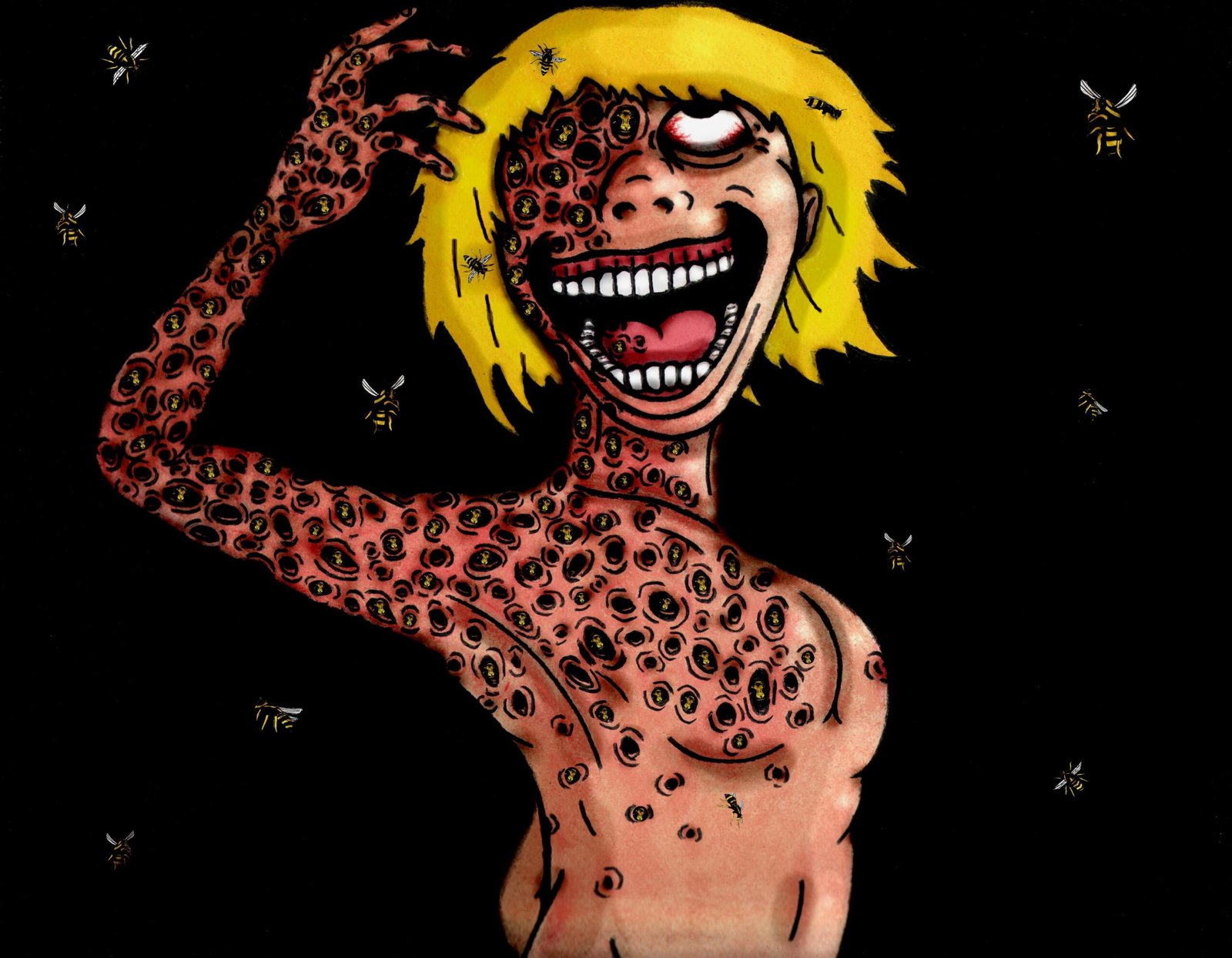
SCP-2401 is an anomalous species of honeybee that transforms human hosts into biological hives through parasitic infection. Female hosts experience symbiotic benefits including tissue regeneration and amphetamine production, while male hosts serve primarily as reproductive vessels for colony fertilization before deteriorating.
The Biology of Human Hives
SCP-2401 represents a radical departure from standard Apis mellifera biology. These bees don’t build external wax structures—they colonize human tissue directly, converting the host’s body into a functional hive. The infection begins when larvae are introduced into the host’s system, typically through ingestion or open wounds.
Once established, the colony integrates with the host’s cardiovascular and nervous systems. The bees construct honeycomb structures within body cavities, particularly the thoracic and abdominal regions. Unlike typical parasites that simply drain resources, SCP-2401 modifies host physiology to create a sustainable environment for both organisms.
The neurochemical alterations are particularly significant. Infected hosts experience elevated dopamine and serotonin levels, creating a euphoric state that masks the physical trauma of housing thousands of insects. The host’s immune system is selectively suppressed to prevent rejection of the colony while maintaining defense against external pathogens.
Female hosts develop enhanced metabolic efficiency, allowing them to sustain both themselves and the hive with minimal caloric intake. The bees produce a specialized royal jelly variant that accelerates cellular repair, effectively granting the host regenerative capabilities that far exceed normal human healing rates.
Mary: The First Host and Patient Zero
SCP-2401-Alpha, designated “Mary,” represents the Foundation’s primary research subject and the most complete example of human-bee symbiosis. Before infection, Mary was an ordinary civilian who encountered the anomaly under circumstances that remain partially redacted from public documentation.
Her transformation occurred gradually over several weeks. Initial symptoms included unexplained weight loss, elevated body temperature, and reports of “buzzing sensations” beneath the skin. By the time Foundation personnel intervened, Mary had achieved complete symbiosis—her body had become a thriving superorganism.
Unlike later infected individuals who were contained during early infection stages, Mary reached a terminal symbiotic state. Her body produces continuous streams of amphetamines, maintaining her in a state of heightened awareness and contentment. She reports no desire for rescue and actively resists separation from her colony.
Medical scans reveal that approximately 40% of Mary’s internal volume consists of honeycomb structures. Despite this massive displacement of organs, she maintains full cognitive function and physical mobility. The bees have essentially restructured her anatomy without compromising vital systems—a feat that suggests either remarkable evolutionary adaptation or intentional biological engineering.
Classification & Containment Protocol
SCP-2401 is classified as Euclid due to its unpredictable transmission vectors and the difficulty of reversing advanced infections. While the anomaly doesn’t actively seek to spread, infected hosts may inadvertently transmit larvae through close contact or contaminated food sources.
Containment requires isolated humanoid housing with climate control maintained between 18-24°C to prevent colony stress. Mary’s chamber includes specialized ventilation to manage the constant presence of airborne bees and pheromones. All personnel interactions require full hazmat protocols to prevent accidental exposure to larvae.
The Euclid classification reflects a critical challenge: infected hosts cannot be safely separated from their colonies once symbiosis reaches advanced stages. Attempted removal results in catastrophic organ failure as the honeycomb structures have replaced or fused with essential tissues. The Foundation must balance containment with the ethical reality that hosts like Mary are functionally dependent on their parasites for survival.
The Male Host Problem: Reproductive Exploitation
Male hosts experience a fundamentally different relationship with SCP-2401. Rather than achieving symbiosis, males serve as temporary reproductive vessels. The colony uses male hosts to obtain genetic material necessary for fertilizing the hive’s eggs—a process that rapidly depletes the host’s physical resources.
Infected males exhibit extreme metabolic stress as the bees extract proteins, lipids, and genetic material at unsustainable rates. Unlike female hosts who receive regenerative benefits, males experience accelerated tissue degradation, organ failure, and psychological deterioration within weeks of infection.
This sex-specific parasitism suggests SCP-2401 evolved (or was designed) with sophisticated recognition of human sexual dimorphism. The bees somehow identify host sex and adjust their colonization strategy accordingly—exploiting males for short-term reproductive gains while cultivating females as long-term hive infrastructure.
The ethical implications are profound. Male hosts retain consciousness throughout their exploitation, aware of their bodies being consumed from within. Foundation protocols mandate immediate termination of male infections before advanced stages, as no treatment has proven effective and allowing the process to continue constitutes unnecessary suffering.
Amphetamine Production and Symbiotic Benefits
The biochemical rewards SCP-2401 provides to female hosts create a powerful dependency mechanism. The colony’s specialized glands produce compounds chemically identical to pharmaceutical amphetamines, flooding the host’s system with stimulants that enhance focus, energy, and mood.
This isn’t merely a side effect—it’s a sophisticated control mechanism. The constant amphetamine supply creates a neurochemical addiction that makes hosts psychologically resistant to treatment. Mary and other long-term hosts report feeling “incomplete” and “hollow” when separated from their colonies, even temporarily.
The regenerative properties compound this dependency. Hosts experience accelerated wound healing, reduced aging markers, and enhanced immune function. One documented case showed a host recovering from a compound fracture in 72 hours—a process that would normally require months. The bees’ royal jelly variant stimulates stem cell production and cellular repair at rates that border on anomalous even by SCP standards.
From an evolutionary perspective, this represents near-perfect parasitic adaptation. By providing tangible benefits, SCP-2401 transforms hosts into willing participants rather than victims seeking escape. The symbiosis becomes self-reinforcing: the longer the infection persists, the more dependent the host becomes on the colony’s biochemical support.
Frequently Asked Questions
Can SCP-2401 infections be cured?
Early-stage infections (within 48-72 hours) can be treated with targeted antiparasitic protocols and surgical removal of larvae. However, once the colony establishes honeycomb structures within body cavities, removal becomes impossible without killing the host. Advanced symbiosis cases like Mary are considered permanent.
Why don’t the bees just build normal hives?
SCP-2401’s preference for human hosts suggests either artificial engineering or extreme evolutionary specialization. The human body provides temperature regulation, mobility, and protection that external hives cannot match. Additionally, the neurochemical control mechanisms indicate these bees evolved specifically to exploit human biology.
What happens if an infected host dies?
The colony typically abandons deceased hosts within hours, seeking new vessels. However, if a queen is present within the body, the bees may attempt to preserve the corpse temporarily while larvae mature. Foundation protocols require immediate incineration of deceased infected individuals to prevent colony escape.
Are there other SCP-2401 hosts besides Mary?
Foundation records indicate multiple contained instances, though Mary remains the most extensively studied due to her advanced symbiotic state. Other hosts are typically contained during earlier infection stages or represent male hosts undergoing reproductive exploitation.
Could SCP-2401 cause a containment breach scenario?
While theoretically possible, SCP-2401’s transmission requires direct contact with larvae or contaminated materials. The anomaly lacks the aggressive spread mechanisms of airborne or memetic threats. However, an infected individual in a population center could create a localized outbreak before detection, making continued containment essential.