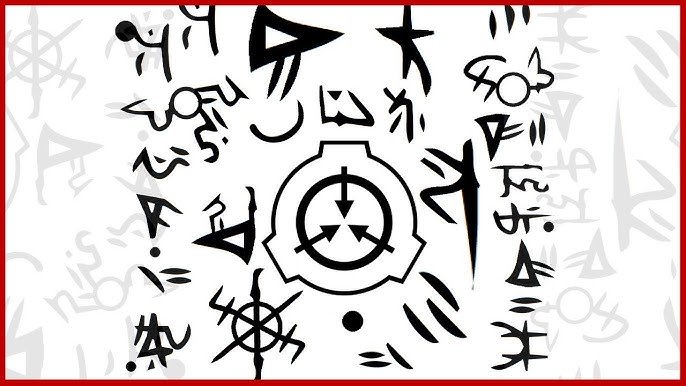
SCP-2140 is a Thaumiel-class anomalous image that retrocausally alters the personal history of anyone who views it, rewriting their entire timeline so they have always been a loyal Foundation employee. Derived from ancient Daevite symbols through Project Kallinikos, this reality-bending tool represents one of the Foundation’s most ethically controversial assets—a recruitment method that erases who you were and replaces it with who they need you to be.
The Thaumiel Paradox: Why SCP-2140 Exists
Most SCPs are threats to be contained. SCP-2140 is different—it’s classified as Thaumiel, meaning it’s a Foundation asset used to contain or counteract other anomalies. But here’s the disturbing twist: this “asset” is a weapon aimed at human identity itself.
The Foundation created SCP-2140 to solve a critical operational problem: how do you recruit personnel for classified projects when conventional vetting takes months and security risks are unacceptable? Their solution bypasses the recruitment process entirely by retroactively making the target person a Foundation employee who has always worked there.
When someone views SCP-2140 in its entirety, reality restructures around them. Their memories change. Their employment records change. Their colleagues remember them differently. From the perspective of everyone except the viewer in that brief moment of transition, this person has always been Foundation personnel. The ethical nightmare is obvious: you’re not recruiting someone—you’re erasing them and replacing them with a loyal operative.
The Foundation justifies this through utilitarian logic. In a world where reality-bending entities threaten human existence, individual autonomy becomes negotiable. SCP-2140 doesn’t just create loyal employees; it creates employees with fabricated decades of experience, complete skill sets, and unshakeable dedication. It’s the ultimate insider threat countermeasure because these individuals were never outsiders to begin with.
Project Kallinikos: The Daevite Connection
SCP-2140 wasn’t invented from scratch—it was reverse-engineered from SCP-2140-1-D, a Daevite artifact containing reality-altering glyphs. The Daevites are one of the SCP universe’s most significant ancient civilizations, known for their mastery of flesh-crafting, slavery-based societies, and reality manipulation through symbolic language.
Project Kallinikos was the Foundation’s initiative to weaponize Daevite technology. The name itself references Greek fire, the Byzantine Empire’s secret weapon—appropriate for a project that turns ancient enemy technology into a modern strategic advantage. Researchers discovered that certain Daevite symbols could impose narrative structures onto reality itself. These weren’t just pictures; they were instructions written in a language that the universe was compelled to obey.
The original artifact, SCP-2140-1-D, likely served a different purpose in Daevite society—possibly converting conquered populations into loyal servants or rewriting the histories of rival city-states. The Foundation extracted the core retrocausal mechanism and refined it, stripping away the more dangerous or unpredictable elements to create SCP-2140: a controlled, targeted version that only affects individual viewers and only in one specific way.
This connection to Daevite civilization places SCP-2140 within a broader pattern of the Foundation exploiting anomalous civilizations’ technologies. The ethics become even murkier when you consider that the Foundation is using tools designed by a civilization known for its brutal subjugation of other peoples.
How the Retroconverter Works: Timeline Mechanics Explained
The retrocausal mechanism behind SCP-2140 operates on principles that violate conventional causality. When you view the complete image, it doesn’t just change your future—it rewrites your past. But how does an image alter events that already happened?
The key lies in understanding that SCP-2140 doesn’t change the timeline; it changes which timeline you’re in. Think of reality as a branching tree of possibilities. In one branch, you never worked for the Foundation. In another, you’ve been a Foundation researcher for fifteen years. SCP-2140 acts as a bridge, moving your consciousness from the first branch to the second while simultaneously adjusting the memories of everyone around you to match the new timeline.
The cognitive experience for the viewer is reportedly disorienting. For a brief moment, you hold two sets of memories: your original life and your “new” Foundation career. Then the original memories fade, not erased but overwritten, like recording over an old tape. You remember your first day at Site-19. You remember your training. You remember classified projects you’ve never actually worked on—except now you have, because the timeline says you did.
The philosophical implications are staggering. If your memories define your identity, and your memories have been completely replaced, are you still the same person? The Foundation’s position is pragmatic: continuity of consciousness means continuity of self. You’re still “you,” just with a different history. Critics would argue this is functionally identical to killing someone and replacing them with a doppelganger who thinks they’re the original.
The Neutralization of SCP-2140-1-D
SCP-2140-1-D, the original Daevite artifact, has been classified as Neutralized. The documentation doesn’t specify exactly what happened, but the implications are clear: the source material was too dangerous to keep intact.
Daevite artifacts are notoriously unstable. Their reality-bending properties often come with unpredictable side effects or hidden functions that only activate under specific conditions. SCP-2140-1-D likely possessed capabilities beyond simple personnel conversion—perhaps it could rewrite larger sections of history, affect multiple targets simultaneously, or contained memetic hazards that made it dangerous even to study.
The decision to neutralize the original while preserving the derived image (SCP-2140) suggests a calculated risk assessment. The Foundation extracted what they needed—a controlled retrocausal conversion tool—and eliminated the uncontrollable source. This follows a pattern seen with other Daevite artifacts: take what’s useful, destroy what’s dangerous, and hope you’ve correctly identified which is which.
There’s also the possibility that SCP-2140-1-D was neutralized not by choice but by necessity. Perhaps it activated unexpectedly, or its effects began spreading beyond containment. The Neutralized classification could be covering up a containment breach that was resolved by destroying the artifact entirely. The Foundation’s documentation is deliberately vague on this point, which usually means the truth is worse than they want to admit.
Containment Protocol Analysis: Why No Containment?
SCP-2140’s containment procedures are remarkably minimal: it poses no threat to Foundation personnel. This makes sense on the surface—an image that only makes people loyal to the Foundation isn’t dangerous to the Foundation. But this reasoning reveals a troubling blind spot in the Foundation’s security philosophy.
The lack of containment assumes that making someone a loyal Foundation employee is always beneficial and never problematic. But what if SCP-2140 is viewed by someone in a critical external position—a government official, a rival organization’s leader, or a civilian with important non-Foundation responsibilities? Their sudden “conversion” could create diplomatic incidents, security breaches, or timeline inconsistencies that draw unwanted attention.
There’s also the question of consent and legal liability. If SCP-2140 is used on someone without their knowledge, the Foundation has committed what amounts to identity assassination. The person’s original life, relationships, and goals are erased. Their family might remember them differently or not at all, depending on how thoroughly the timeline adjusts. This isn’t recruitment; it’s forced conscription through reality manipulation.
The most significant vulnerability is proliferation. If hostile groups obtain copies of SCP-2140, they can’t use it to create loyal Foundation personnel—but they could potentially reverse-engineer it to create their own version. Imagine a reality-altering image that converts viewers into loyal members of the Chaos Insurgency or the Church of the Broken God. The Foundation’s lack of stringent containment protocols for SCP-2140 suggests they’re either confident in their information security or dangerously complacent.
Cross-Reference: Other Reality-Altering SCPs
SCP-2140 belongs to a category of anomalies that manipulate memory, identity, and timeline continuity. Understanding its place in this taxonomy helps contextualize its unique properties and dangers.
SCP-055 is an antimemetic object that cannot be remembered. While SCP-055 erases memory, SCP-2140 creates it—they’re opposite sides of the same coin. Both demonstrate that human memory is not a reliable record of objective reality in the SCP universe.
The Antimemetics Division deals with threats that erase themselves from perception and memory. SCP-2140 could be considered an inverse antimemetic: instead of making something impossible to remember, it makes false memories impossible to distinguish from real ones. The Division’s techniques for detecting memory manipulation would be critical for identifying SCP-2140 exposure.
SCP-3999 involved reality-altering effects on a massive scale, rewriting the existence of Researcher Talloran repeatedly. SCP-2140 operates on a smaller scale but with more precision—it doesn’t destroy and recreate reality; it surgically edits specific timelines.
SCP-2000 (Deus Ex Machina) can rebuild human civilization after an extinction event, including restoring individuals with fabricated memories of a continuous history. SCP-2140 uses similar retrocausal principles but applies them to individuals rather than entire populations. Both raise questions about whether restored or rewritten people are truly the same as their originals.
The Foundation’s willingness to use SCP-2140 as a tool rather than contain it as a threat reveals their pragmatic approach to reality-bending anomalies. When the anomaly serves their purposes, ethical concerns become secondary to operational utility.
Frequently Asked Questions
Can SCP-2140 be reversed?
The documentation doesn’t mention any reversal procedure, which suggests either it’s impossible or the Foundation hasn’t developed one. Given that SCP-2140 rewrites the timeline itself rather than just implanting false memories, reversal would require another retrocausal effect of equal magnitude. The affected individual’s original timeline may no longer exist in any accessible form—it’s been overwritten at the reality level, not just the neurological level. Amnestics wouldn’t work because there’s nothing to forget; the new memories are “real” within the current timeline structure.
What happens if you only view part of SCP-2140?
The documentation specifies that the effect requires viewing the image “in full,” implying partial exposure is ineffective or produces incomplete results. Partial viewing might trigger minor timeline inconsistencies—small false memories or brief moments of confusion—without the complete identity rewrite. This built-in safety mechanism suggests the Foundation designed SCP-2140 with deliberate activation requirements to prevent accidental exposure. It’s a feature, not a bug: you can’t accidentally convert someone by showing them a fragment of the image.
Why is SCP-2140 classified as Thaumiel instead of Safe?
Thaumiel classification isn’t about danger level—it’s about strategic value. Thaumiel-class objects are the Foundation’s most closely guarded secrets, tools used to contain or counteract other anomalies. SCP-2140 is Thaumiel because it’s a weapon in the Foundation’s arsenal, not because it’s dangerous. The classification also restricts access: only personnel with the highest clearance levels know Thaumiel objects exist. This prevents rival organizations from learning about the Foundation’s strategic capabilities and ensures that SCP-2140 can’t be easily compromised or stolen.
Could SCP-2140 create false Foundation personnel who are actually spies?
This is the nightmare scenario the Foundation presumably has contingency plans for. If a hostile organization obtained SCP-2140 and modified it, they could theoretically create deep-cover agents with completely authentic Foundation backgrounds. These individuals would pass every security check because, according to reality, they are legitimate Foundation employees. The only defense would be regular timeline consistency audits—checking whether personnel records match across multiple independent documentation systems and looking for reality anchors that might reveal timeline manipulation. The fact that the Foundation uses SCP-2140 at all suggests they believe their counter-intelligence measures are sufficient to detect such infiltration, but this confidence may be misplaced.
What does this say about the Foundation’s ethics?
SCP-2140 represents the Foundation’s utilitarian philosophy taken to its logical extreme. They believe that protecting humanity from existential threats justifies any means, including erasing individual identities and rewriting personal histories without consent. The use of SCP-2140 reveals that the Foundation views people as resources to be optimized rather than individuals with inherent rights. This isn’t necessarily portrayed as villainous in SCP lore—it’s presented as the tragic necessity of an organization fighting incomprehensible horrors. But it raises the question: if the Foundation is willing to destroy individual identity to protect humanity, at what point does the cure become worse than the disease?