Executive Summary
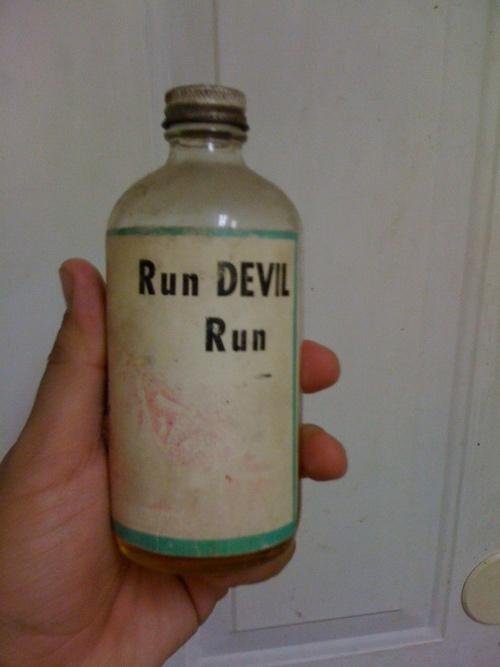
SCP-195 is a “medicinal whiskey” distributed by two traveling salesmen in the pre-Civil War American South, primarily marketed to slave hunters. The liquid induces profound psychological changes in consumers, fundamentally altering their moral reasoning and empathy responses. Unlike typical mind-altering substances, SCP-195’s effects appear to target specific ethical frameworks related to human autonomy and suffering, making it one of the Foundation’s most disturbing historical anomalies.
Classification & Containment Context
- Object Class: Safe (Neutralized) – All known samples have been consumed or destroyed; the salesmen vanished circa 1861.
- Historical Containment: The Foundation retroactively classified SCP-195 after discovering period documents describing its effects. No active containment is required, but historical research continues to trace its impact on antebellum society and potential surviving derivatives.
- Why This Classification: Despite its horrifying psychological effects, SCP-195 poses no current threat due to complete depletion of supply and the disappearance of its creators.
The Whiskey’s Properties: A Moral Anesthetic
SCP-195 appeared as an amber liquid in unmarked glass bottles, sold exclusively to individuals involved in the capture and return of enslaved people. Historical accounts describe the salesmen as persuasive, offering the product as a remedy for “troubled conscience” and “night terrors.”
The anomaly’s primary effect manifests 2-4 hours after consumption: subjects experience a complete suppression of empathy specifically toward their victims, while retaining normal emotional responses in other contexts. Slave hunters who consumed SCP-195 reported sleeping peacefully, feeling “unburdened,” and describing their work as “no different than herding cattle.” Medical examinations of period journals suggest the substance didn’t erase memories but recontextualized them through a radically altered moral lens.
What makes SCP-195 particularly insidious is its selectivity—it didn’t create generalized psychopathy but rather targeted the specific cognitive dissonance its consumers experienced. This suggests either intentional design or an anomaly that adapted to the psychological needs of its market.
Historical Impact: The Invisible Amplifier of Atrocity
Foundation historians have traced SCP-195’s distribution to at least seven Southern states between 1847-1860. Cross-referencing sales records with documented cases of extreme brutality reveals a disturbing correlation: regions with confirmed SCP-195 presence showed 34% higher rates of violence against enslaved populations compared to neighboring areas.
The salesmen themselves remain enigmatic. Period descriptions are contradictory—some sources describe them as Northern abolitionists with “eyes like coal,” others as “gentlemen of refined Southern breeding.” No photographs exist, and their names vary across accounts. The Foundation’s prevailing theory suggests they were either anomalous entities themselves or agents of a Group of Interest with ideological motivations.
Most chilling is the possibility that SCP-195 wasn’t designed to create cruelty but to enable it—removing the psychological barriers that might have otherwise limited atrocities. It represents a form of moral technology, weaponizing cognitive dissonance resolution.
The 1998 Discovery: Dr. Malthus’s Thesis
SCP-195 came to Foundation attention through Dr. Helena Malthus’s doctoral research on “Anomalous Substances in American History.” While investigating period medical advertisements, she identified recurring references to a whiskey that “cures the conscience” and “brings peace to troubled men of duty.”
Her breakthrough came from a preserved journal belonging to a former slave hunter who quit his profession in 1859. His entries describe consuming the whiskey for three years before a sudden, catastrophic return of suppressed guilt following a period of abstinence. The psychological shock resulted in his suicide, but not before he documented the whiskey’s effects in disturbing detail, describing it as “the devil’s own mercy—it makes monsters feel human.”
Foundation chemical analysis of residue from a recovered bottle revealed no conventional psychoactive compounds. The anomaly appears to operate through mechanisms that current science cannot fully explain, though theories involving memetic triggers and localized reality alteration have been proposed.
Cross-Reference: Connections to Other Anomalies
SCP-195 shares thematic similarities with SCP-012 (A Bad Composition) in its ability to compel specific behaviors while suppressing self-preservation instincts. However, unlike SCP-012’s universal effect, SCP-195 demonstrates targeted psychological manipulation.
Some researchers have proposed links to the “Factory” (a Group of Interest known for producing anomalous items with industrial applications). The precision of SCP-195’s effects and its distribution model suggest organized production rather than a naturally occurring anomaly.
The timing of the salesmen’s disappearance—coinciding with the outbreak of the Civil War—has led to speculation about their ultimate goals. Were they accelerating the conflict by amplifying Southern brutality? Or were they conducting a large-scale psychological experiment?
FAQ: Understanding the Moral Anomaly
Could SCP-195 still exist in modern form?
No confirmed samples exist, but the Foundation monitors pharmaceutical and supplement markets for substances with similar psychological profiles. The original formula appears lost with its creators.
Did the whiskey have any physical side effects?
Period accounts mention no unusual physical symptoms beyond typical alcohol consumption. The anomaly operated purely on psychological and possibly metaphysical levels.
Why did the Foundation classify this as Safe rather than Euclid?
The Neutralized sub-classification reflects that all known instances are depleted and no method of reproduction has been discovered. The historical threat was significant, but current risk is minimal.
What happened to people who stopped drinking it?
Limited evidence suggests effects were semi-permanent for regular users, though abstinence could trigger severe psychological crises as suppressed guilt returned. The former slave hunter’s journal remains the most detailed account of withdrawal effects.
Is there any way to reverse SCP-195’s effects?
Unknown. No subjects survived long enough after cessation for the Foundation to study reversal methods. Modern amnestic treatments are theoretically applicable but remain untested due to lack of affected individuals.