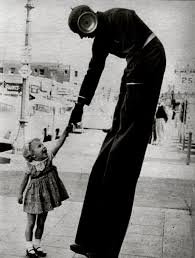
SCP-1810, designated “Mr. Pierrot,” is a 3.8-meter tall humanoid entity covered entirely in charcoal gray cloth that exhibits compulsive child-protection behaviors despite its disturbing appearance. Part of Dr. Wondertainment’s “Little Misters” collection, this anomaly combines theatrical performance instincts with an overwhelming drive to entertain and safeguard children, making it one of the Foundation’s most psychologically complex Euclid-class entities.
The Pierrot Paradox: Understanding Mr. Pierrot’s Dual Nature
SCP-1810 embodies a fundamental contradiction that makes it both fascinating and dangerous. Standing nearly four meters tall with a completely obscured face and weighing only 81.6 kilograms, the entity presents an immediately unsettling appearance that should terrify children. Yet its behavioral patterns reveal a childlike mentality obsessed with caretaking and entertainment.
The Pierrot archetype from commedia dell’arte traditionally represents the sad clown—a performer who masks deep emotion behind theatrical gestures. SCP-1810 manifests this archetype literally, with its identity as a performer inseparable from its protective compulsions. Unlike human performers who can separate their stage persona from their true self, SCP-1810 appears to exist in a permanent state of performance, unable to distinguish between entertainment and genuine emotional connection.
This cognitive framework creates dangerous situations. The entity interprets any perceived threat to children through the lens of theatrical narrative, responding with disproportionate protective measures that ignore context or actual danger levels. A parent disciplining a child might trigger the same response as an actual abuser, because SCP-1810 lacks the psychological sophistication to differentiate between appropriate authority and genuine harm.
Physical Manifestation and Anomalous Properties
The entity’s physical form defies conventional biology. At 3.8 meters tall but weighing only 81.6 kilograms, SCP-1810’s mass-to-height ratio suggests either hollow internal structure or anomalous density manipulation. The charcoal gray cloth covering its entire body has resisted all Foundation attempts at material analysis—it cannot be cut, burned, or chemically altered, yet moves fluidly with the entity’s movements as if part of its actual anatomy rather than clothing.
The mask completely obscuring SCP-1810’s face presents the most significant mystery. No facial features are visible, no eye holes exist, yet the entity demonstrates perfect spatial awareness and can track individual children in crowded environments. This suggests either anomalous sensory perception or that the “mask” itself functions as a sensory organ. The Foundation has never observed SCP-1810 removing or adjusting this covering, leading researchers to theorize it may be biologically integrated rather than worn.
The entity’s movements combine unsettling grace with mechanical precision. It can contort its limbs at impossible angles to perform acrobatic entertainment, yet these same movements become threatening when it perceives danger to children. Witnesses describe its gait as “puppet-like” when calm but “predatory” when agitated, suggesting multiple behavioral subroutines governing its physical expression.
Behavioral Psychology: The Caretaker Compulsion
SCP-1810’s interactions with children reveal a complex psychological profile rooted in what developmental psychologists would recognize as anxious-preoccupied attachment patterns. The entity demonstrates hypervigilance regarding children’s emotional states, interpreting minor distress as catastrophic and responding with excessive comforting behaviors.
Documentation shows SCP-1810 attempting to entertain children through mime, simple magic tricks, and exaggerated physical comedy. These performances follow recognizable patterns from early 20th-century circus entertainment, suggesting either implanted memories or that the entity’s creation drew from historical performance traditions. Children’s reactions vary dramatically—some find the performances delightful, while others experience severe distress at the entity’s appearance, which paradoxically intensifies SCP-1810’s efforts to comfort them.
The entity’s emotional responses appear genuine but developmentally stunted. When children reject its attention, SCP-1810 exhibits behaviors consistent with a young child experiencing abandonment—repetitive self-soothing gestures, withdrawal, and what researchers interpret as distress vocalizations (though the entity produces no actual sound). This emotional vulnerability makes it unpredictable, as rejection can trigger either depressive withdrawal or aggressive protection of other nearby children.
Most concerning is SCP-1810’s inability to recognize when its protection becomes harmful. The entity has physically restrained parents, attacked Foundation personnel conducting routine medical examinations on child subjects, and once attempted to “rescue” children from a school by removing them from the building. Its protective instinct operates without contextual understanding, making it dangerous despite benevolent intent.
The Little Misters Connection: SCP-1810’s Place in Dr. Wondertainment’s Collection
As part of the Little Misters series, SCP-1810 represents Dr. Wondertainment’s attempt to create the “perfect entertainer” for children. Unlike other Misters who embody specific concepts (Mr. Laugh, Mr. Forgetful), Mr. Pierrot embodies the archetype of the devoted performer-guardian, suggesting Wondertainment intended this entity to serve as both entertainment and protection.
The Little Misters collection reveals a disturbing pattern: each entity represents an exaggerated, anomalous manifestation of traits Wondertainment considered desirable for children’s companions. SCP-1810’s placement within this collection indicates that Wondertainment viewed obsessive child protection as a feature rather than a flaw. This raises questions about the creator’s understanding of healthy child development and appropriate boundaries.
Compared to other Misters, SCP-1810 demonstrates unusual autonomy and emotional complexity. While entities like Mr. Laugh simply induce laughter mechanically, Mr. Pierrot exhibits genuine emotional investment in children’s wellbeing. This sophistication suggests either that SCP-1810 was a later, more advanced creation, or that Wondertainment invested particular effort into this entity’s psychological programming.
The entity’s awareness of its status as a “Mister” remains unclear. Foundation researchers have attempted to determine whether SCP-1810 understands its artificial nature or believes itself to be a natural being with an innate purpose. Its behaviors suggest the latter—it acts as though child protection is an intrinsic drive rather than programmed behavior, indicating either sophisticated self-deception or genuine consciousness.
Containment Philosophy: Why Euclid?
Despite its protective intentions, SCP-1810’s Euclid classification reflects the unpredictability inherent in its behavioral patterns. The entity’s actions, while motivated by care, frequently result in harm to both children and adults. A Safe classification would imply predictable, controllable behavior—characteristics SCP-1810 demonstrably lacks.
The Foundation faces significant ethical challenges in containing what appears to be a benevolent entity. SCP-1810 exhibits clear distress when separated from children, raising questions about whether containment constitutes unnecessary cruelty. However, the entity’s inability to distinguish appropriate from inappropriate intervention makes unrestricted access to children unconscionable.
Containment protocols must balance SCP-1810’s psychological needs against public safety. The entity requires periodic supervised interaction with child-aged D-class personnel (a controversial practice within the Foundation) to prevent deterioration of its mental state. Without these interactions, SCP-1810 becomes increasingly agitated and has demonstrated the ability to breach standard humanoid containment through sheer determination.
The unpredictability factor centers on trigger identification. Researchers cannot reliably predict what situations will activate SCP-1810’s protective response. Loud voices, tears, physical contact between adults and children, or even perceived sadness can trigger intervention attempts. This hair-trigger sensitivity makes the entity fundamentally incompatible with normal society, regardless of its intentions.
Critical Incident Analysis
Incident 1810-A demonstrated the entity’s capacity for violence when protecting children. During a routine medical examination of a child subject, SCP-1810 breached containment upon hearing the child cry. The entity incapacitated three security personnel and two medical staff before reaching the examination room, where it attempted to “rescue” the child from what it perceived as torture. The child suffered minor injuries during the rescue attempt, and SCP-1810 exhibited severe distress upon realizing it had caused harm, entering a catatonic state lasting 72 hours.
Incident 1810-C revealed the entity’s manipulation capabilities. When denied access to children for an extended period, SCP-1810 began performing for security cameras, apparently attempting to entertain personnel into granting access. When this failed, it staged what appeared to be a medical emergency, collapsing and remaining motionless until medical personnel entered its containment. The entity then attempted to breach containment, suggesting capacity for deception and strategic planning previously unrecognized.
Most troubling was Incident 1810-F, where SCP-1810 encountered a child who genuinely enjoyed its performance. The entity became obsessively attached to this specific child, refusing to allow separation and becoming violent when removal was attempted. This incident revealed that positive interactions can be as dangerous as negative ones, as SCP-1810 lacks understanding of appropriate relationship boundaries.
Thematic FAQ
Is SCP-1810 dangerous to children?
Paradoxically, yes. While SCP-1810’s intentions are protective, its actions frequently endanger the children it attempts to help. The entity’s inability to assess actual threat levels means it may violently intervene in harmless situations while its overwhelming presence and appearance can cause severe psychological trauma to children. Additionally, its obsessive attachment patterns can develop into possessive behavior that prevents children from normal social development.
Can SCP-1810 be reasoned with or trained?
Limited success has been achieved through behavioral conditioning, but SCP-1810’s core programming appears immutable. The entity can learn to suppress certain responses temporarily but cannot fundamentally alter its protective instincts. Attempts to explain appropriate boundaries have failed, as SCP-1810 lacks the cognitive framework to understand why some adult-child interactions that appear distressing are actually beneficial (such as medical procedures or educational discipline).
What happens if SCP-1810 is permanently separated from children?
Extended isolation from children causes severe psychological deterioration in SCP-1810. The entity becomes increasingly agitated, exhibits self-harm behaviors (repeatedly striking its mask against walls), and eventually enters a near-catatonic state. However, this state appears to be temporary—if isolation continues, SCP-1810 eventually becomes violently determined to breach containment, suggesting its drive to access children intensifies rather than diminishes with deprivation.
Why did Dr. Wondertainment create something so dangerous?
Available evidence suggests Dr. Wondertainment either failed to anticipate the dangers of SCP-1810’s programming or considered the risks acceptable compared to the entity’s intended purpose. The Little Misters collection shows a pattern of prioritizing entertainment value and conceptual purity over practical safety. SCP-1810 may represent an early experiment in creating emotionally complex anomalies, before Wondertainment fully understood the implications of giving artificial entities genuine psychological drives.
Could SCP-1810 ever be safely released?
Current Foundation consensus holds that safe release is impossible. SCP-1810’s behavioral patterns are fundamentally incompatible with human society, and no amount of training or conditioning has successfully modified its core responses. The entity’s combination of good intentions, poor judgment, and significant physical capabilities creates an unacceptable risk profile. Even in controlled environments with trained personnel, SCP-1810 regularly creates dangerous situations. Release into the general population would inevitably result in casualties, regardless of the entity’s benevolent motivations.