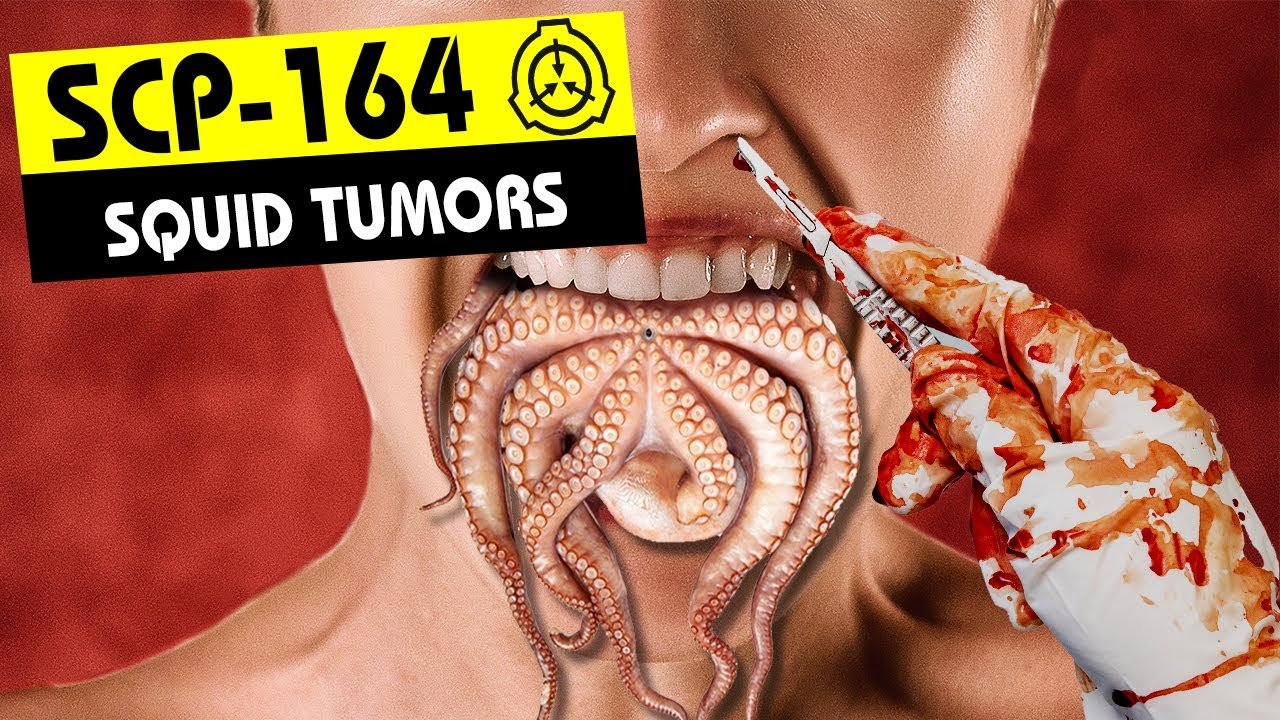
SCP-164 is an anomalous strain of cancerous cells that defies conventional oncology by transforming host tissue into functional cephalopod organisms. Unlike standard tumors, these cells undergo metamorphosis from malignant growths into squid-like entities, creating a parasitic lifecycle that blurs the boundary between cancer and complex multicellular life.
The Cellular Nightmare: What SCP-164 Actually Is
SCP-164 represents a fundamental violation of biological law. At the cellular level, these cancerous cells contain primarily human DNA, yet they possess the terrifying ability to express cephalopod genetic sequences that shouldn’t exist within mammalian tissue. Standard pathology reveals sarcoma-like characteristics initially—the cells appear as aggressive soft tissue tumors that would typically respond to conventional oncology treatments.
The anomaly becomes apparent during cellular division. While normal cancer cells replicate chaotically, SCP-164 cells follow an organized developmental pattern reminiscent of embryonic differentiation. Genetic analysis shows impossible recombination events where human chromosomes spontaneously integrate functional cephalopod genes, particularly those governing chromatophore development, tentacle formation, and neural complexity associated with octopodiformes.
The cells exhibit extreme adaptability to host environments, hijacking the body’s vascular system to supply nutrients for their transformation. Unlike typical tumors that simply grow, SCP-164 actively restructures surrounding tissue, converting muscle, fat, and connective tissue into the building blocks for cephalopod anatomy.
The Metamorphosis: From Tumor to Cephalopod
The transformation timeline follows a horrifying progression that medical professionals describe as “directed neoplastic evolution.” Initial infection presents as standard tumor growth over 2-4 weeks, with patients experiencing localized pain and swelling. Biopsies during this phase reveal rapidly dividing cells with abnormal morphology.
Between weeks 4-8, the metamorphosis accelerates. The tumor mass begins differentiating into distinct tissue types: muscular structures resembling tentacles, primitive eye spots with functional photoreceptors, and a central ganglion that develops genuine neural activity. Host tissue isn’t simply destroyed—it’s repurposed. The anomaly essentially performs in-vivo genetic engineering, rewriting cellular identity at the molecular level.
By week 8-12, the developing cephalopod achieves functional organ systems. Chromatophores appear beneath the skin surface, allowing color changes. The entity develops a beak-like structure and begins exhibiting coordinated movement within the host body. Imaging reveals the creature actively consuming surrounding tissue for growth, behaving as a true parasite rather than a passive tumor.
Terminal stage occurs when the cephalopod reaches sufficient size to compromise vital organs or rupture through the skin. The resulting organism demonstrates full cephalopod behavior including problem-solving abilities, predatory instincts, and environmental adaptation—despite originating from cancerous human cells.
Classification & Containment Protocol
The Foundation classifies SCP-164 as Euclid due to unpredictable transmission vectors and the biological complexity of managing a living, evolving pathogen. Unlike Safe-class anomalies with understood parameters, SCP-164’s ability to spread through unknown mechanisms and its resistance to standard medical intervention create ongoing containment challenges.
Containment procedures require Level 3 biohazard protocols. Laboratory cultures must be maintained in isolated cryogenic storage at -80°C to prevent cellular activity. All personnel handling SCP-164 samples wear full hazmat equipment with positive pressure systems. The Foundation maintains strict quarantine procedures for infected individuals, as traditional cancer treatments—chemotherapy, radiation, surgical excision—prove ineffective once metamorphosis begins.
Infected subjects are housed in medical containment wings with continuous monitoring. The ethical dilemma is profound: standard oncology fails, and allowing the transformation to complete results in the host’s death. The Foundation has explored experimental treatments including targeted gene therapy and memetic suppression of cellular differentiation, with limited success.
Disposal of mature specimens requires incineration at temperatures exceeding 1000°C, as the cephalopod entities retain anomalous properties even after separation from the host. Tissue samples demonstrate regenerative capabilities that standard biological waste protocols cannot neutralize.
Transmission Vectors and Infection Pathways
SCP-164’s epidemiology remains partially understood, which contributes to its Euclid classification. Documented transmission occurs through direct contact with infected tissue or bodily fluids, similar to certain viral cancers like HPV-related malignancies. However, several infection cases show no clear exposure pathway, suggesting potential airborne transmission or environmental persistence.
The incubation period varies dramatically between individuals, ranging from days to months. Genetic factors appear to influence susceptibility—individuals with certain oncogene mutations show accelerated progression, while others demonstrate partial resistance. This variability complicates outbreak prediction and containment.
Traditional cancer screening methods fail to detect early-stage SCP-164 infection. The cells initially mimic benign growths, evading immune system recognition through mechanisms similar to tumor immune evasion. By the time symptoms manifest, the metamorphosis process has typically begun, rendering intervention extremely difficult.
The Foundation has identified potential zoonotic transmission, with marine mammals showing susceptibility to SCP-164 variants. This raises concerns about environmental contamination and the possibility of reservoir species maintaining the anomaly in wild populations.
The Squid Paradox: Evolutionary Biology Gone Wrong
SCP-164 challenges fundamental principles of evolutionary biology and developmental genetics. The spontaneous expression of cephalopod characteristics within mammalian cells suggests either horizontal gene transfer from an unknown source or the activation of deeply conserved genetic sequences that predate the evolutionary split between vertebrates and mollusks.
One prevailing theory among Foundation researchers proposes that SCP-164 represents a form of “ontological cancer”—cells that don’t simply malfunction but actively rewrite their biological identity. The cephalopod DNA may not originate from actual squid species but rather emerge as a manifestation of the anomaly’s reality-altering properties operating at the genetic level.
The directed nature of the transformation implies intelligence or purpose behind the process. Unlike random mutations, SCP-164 follows a reproducible developmental pathway that consistently produces viable cephalopod organisms. This suggests either an external guiding force or that the cells themselves possess a form of collective intelligence directing their metamorphosis.
Alternative theories explore extra-dimensional origins, proposing that SCP-164 cells exist partially outside normal spacetime, allowing them to access genetic information from alternate evolutionary timelines where cephalopods evolved from mammalian ancestors. This would explain the impossible genetic recombination and the anomaly’s resistance to conventional biological laws.
The philosophical implications are disturbing: if cancer cells can spontaneously develop into complex organisms, what prevents other tissue types from similar transformations? SCP-164 may represent a glimpse into a deeper anomalous principle where biological identity is more fluid than conventional science acknowledges.
Case Study: Terminal Stage Progression
Terminal stage SCP-164 infection presents a medical horror scenario documented in Foundation case files. Patient D-8432 provides a representative example: a 34-year-old male who developed initial symptoms resembling a benign lipoma on his left shoulder. Within six weeks, imaging revealed a 15-centimeter mass with distinct anatomical structures.
By week ten, the patient reported sensation of movement beneath the skin and visible color changes across the affected area. Surgical exploration revealed a fully formed cephalopod organism approximately 20 centimeters in length, with eight functional tentacles, compound eyes, and a developed nervous system. The entity had integrated with the patient’s vascular system, essentially parasitizing his circulatory network.
The creature demonstrated problem-solving abilities when researchers presented it with puzzle boxes while still attached to the host. It exhibited stress responses to stimuli, released ink-like substances into surrounding tissue, and attempted to detach from the host body through coordinated muscular contractions.
Host survival at this stage approaches zero. The cephalopod’s metabolic demands exceed what the human body can sustain, leading to organ failure, severe anemia, and systemic shock. In cases where the entity successfully separates, it survives independently for 24-72 hours before expiring, suggesting incomplete adaptation to terrestrial environments.
Post-mortem analysis of hosts reveals complete restructuring of affected tissue. The transformation consumes an average of 15-20% of total body mass, with the cephalopod entity incorporating bone, muscle, and organ tissue into its structure. The process is irreversible—no recovered tissue retains human cellular characteristics.
Frequently Asked Questions
Can SCP-164 be cured with standard cancer treatment?
No. Chemotherapy, radiation therapy, and surgical excision prove ineffective once metamorphosis begins. The cells demonstrate extreme resistance to cytotoxic agents and regenerate rapidly after surgical removal. The anomalous nature of the transformation operates outside conventional biological mechanisms that cancer treatments target.
How does SCP-164 differ from regular cancer?
Standard cancer involves uncontrolled cellular division without differentiation. SCP-164 cells undergo organized transformation into functional cephalopod tissue, following a developmental pathway similar to embryonic growth. Regular tumors don’t develop nervous systems, sensory organs, or coordinated behavior—SCP-164 creates living organisms.
What happens to the squid creatures after they separate from hosts?
Separated entities survive 24-72 hours in terrestrial environments before expiring. They demonstrate full cephalopod behavior including hunting reflexes and environmental exploration, but lack adaptations for air-breathing or terrestrial locomotion. The Foundation incinerates all specimens to prevent potential reproduction or further anomalous development.
Is there any way to prevent SCP-164 infection?
Complete avoidance of infected individuals and contaminated materials remains the only reliable prevention method. The Foundation maintains strict quarantine protocols and contact tracing for known cases. No vaccine exists, and prophylactic treatments have shown no efficacy in preventing initial cellular transformation.
Why is SCP-164 classified as Euclid instead of Keter?
While extremely dangerous, SCP-164 doesn’t demonstrate the global catastrophic potential required for Keter classification. Transmission requires specific conditions, and the Foundation has successfully contained outbreaks through quarantine procedures. The unpredictability lies in individual case progression rather than uncontrollable spread, warranting Euclid status with potential reclassification if transmission mechanisms prove more virulent than currently understood.