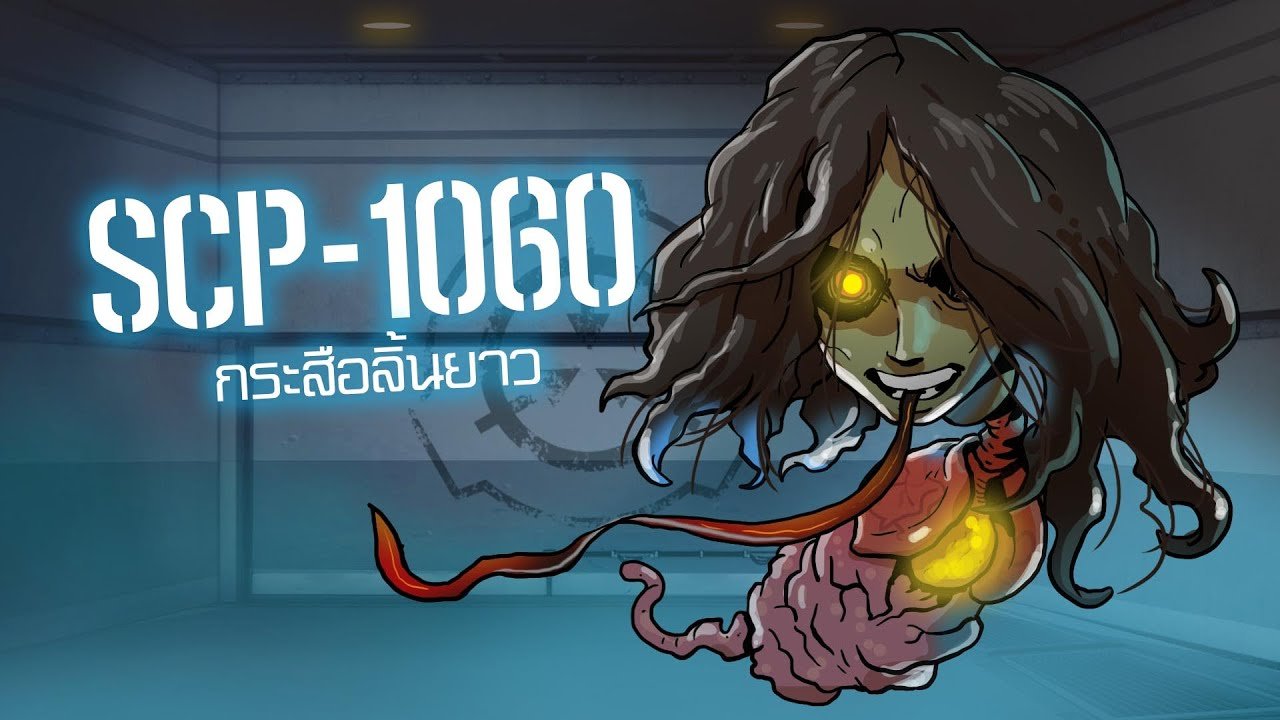
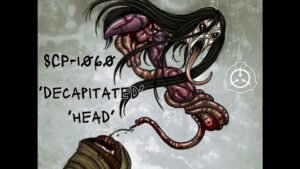
SCP-1060 is a Euclid-class anomaly—a human female of Southeast Asian descent named Adilah who undergoes involuntary transformation into a Penanggalan, a creature from Malaysian folklore. During transformation, her head detaches from her body with trailing organs and viscera, exhibiting predatory behavior and anomalous biological functions that defy conventional physiology.
The Penanggalan Transformation: Biology of a Living Myth
The transformation process of SCP-1060 represents one of the Foundation’s most documented cases of folklore-based anomalous physiology. During the detachment phase, Adilah’s head separates cleanly at the neck while maintaining full neurological function and consciousness. The trailing organs—primarily stomach, intestines, and portions of the esophagus—remain attached and functional, glowing with a faint bioluminescent quality not present in baseline human tissue.
What makes this phenomenon particularly anomalous is the complete absence of blood loss or tissue death. The severed spinal cord maintains neural connectivity through unknown means, allowing motor control of the detached organs which function as primitive locomotion appendages. Thermal imaging reveals the trailing viscera maintain temperatures 3-4 degrees Celsius above normal human body temperature during flight.
Traditional Penanggalan legends describe the creature as a woman who practices black magic, her head flying at night to feed on blood or placentas of pregnant women. SCP-1060 validates the physical description with remarkable accuracy—the detached head, the trailing organs, the nocturnal activity pattern. However, Foundation observations reveal key differences: Adilah’s transformation appears involuntary rather than ritualistic, occurs on an irregular cycle averaging 7-12 days, and her dietary requirements during transformation involve raw meat rather than specifically targeting pregnant women.
The reattachment process proves equally fascinating. Upon returning to her body before dawn, the head realigns with millimeter precision. Tissue regeneration occurs instantaneously at the reconnection point, leaving no scarring or evidence of separation. Biopsies taken from the neck area show cellular structures that remain in a perpetual state of controlled apoptosis, suggesting the body maintains constant readiness for detachment.
Adilah’s Identity: The Human Behind the Horror
Interview logs reveal Adilah as a cooperative, articulate individual who experiences profound psychological distress regarding her condition. Fluent in Malay and conversational in English, she has provided extensive testimony about her transformation experiences, describing the detachment as painless but accompanied by overwhelming hunger and altered perception.
During baseline states, Adilah exhibits normal human cognition, emotional responses, and social behavior. She expresses shame and fear about her transformed state, particularly regarding the predatory instincts that emerge. Foundation psychologists note she retains full memory of actions taken while detached, leading to significant trauma and guilt over her compulsions to hunt.
Her background prior to Foundation custody remains partially classified, but records indicate she was a university student in Kuala Lumpur before her first documented transformation at age 23. She claims no knowledge of how she acquired the condition, denying any involvement with occult practices or exposure to known anomalous objects. Genetic testing reveals markers inconsistent with baseline human DNA, suggesting either inherited anomalous traits or fundamental alteration at the cellular level.
The ethical implications of her containment generate ongoing debate within Foundation ethics committees. Unlike non-sentient anomalies, Adilah actively participates in her own containment, following protocols and communicating her transformation cycles when she senses them approaching. This cooperation has prevented multiple potential breaches, yet she remains indefinitely detained for a condition she neither chose nor can control.

Containment Protocol Analysis: Why Euclid Classification Matters
SCP-1060’s Euclid classification stems from the unpredictable nature of her transformation cycles and the significant threat posed during detached states. Unlike Safe-class anomalies that remain contained through passive means, Euclid objects require active monitoring and adaptive protocols—precisely what Adilah’s condition demands.
The specialized containment chamber measures 8m x 8m x 4m, constructed with reinforced steel walls and ceiling-mounted restraint systems that activate automatically upon transformation detection. Infrared sensors track body temperature fluctuations that precede detachment by approximately 15-30 minutes, triggering lockdown procedures. During transformation, the chamber floods with aerosolized sedatives calibrated to affect the anomalous physiology without causing permanent harm.
Feeding protocols during baseline states follow standard humanoid nutrition guidelines. However, during transformation cycles, raw meat must be provided within the containment chamber to prevent aggressive breach attempts driven by predatory hunger. Failure to satisfy these dietary requirements results in increasingly violent behavior and enhanced strength that has damaged previous containment infrastructure.
The risk assessment identifies several critical failure points. Uncontrolled transformations outside containment could result in civilian casualties, as the detached state exhibits predatory targeting of sleeping humans. The entity demonstrates flight capabilities reaching speeds of 45 km/h and can navigate through openings as small as 30cm in diameter. Standard humanoid containment fails because conventional restraints cannot account for the radical body plan alteration during transformation.

The Folklore Connection: Penanggalan Across Cultures
The Penanggalan legend permeates Malaysian, Indonesian, and Thai folklore, with regional variations describing similar entities under different names—Krasue in Thailand, Leyak in Bali, Manananggal in the Philippines. These legends consistently describe a female entity whose head detaches with trailing organs, hunts at night, and must return to her body before sunrise.
SCP-1060 provides empirical validation for core elements of these myths while challenging others. The physical manifestation matches folklore descriptions with uncanny precision, suggesting these legends may have originated from genuine encounters with similar anomalies throughout history. Foundation anthropologists theorize that Penanggalan-type entities may represent a recurring anomalous phenomenon rather than a singular case.
However, significant discrepancies exist. Traditional accounts claim Penanggalan practitioners voluntarily induce transformation through meditation in vinegar vats, allowing their heads to slip free. Adilah’s involuntary transformations contradict this ritualistic origin. Additionally, folklore attributes various supernatural powers—invisibility, shapeshifting, curse-casting—that SCP-1060 does not exhibit.
The question of causation remains unresolved: Did cultural belief somehow manifest this phenomenon, or did naturally occurring anomalies inspire the legends? Foundation researchers have identified three other potential Penanggalan-type entities in historical records, suggesting a possible genetic or memetic transmission vector. Cross-referencing with similar vampiric anomalies like SCP-████ reveals potential connections to a broader category of hematophagic humanoid anomalies.

Behavioral Patterns During Transformation Cycles
Psychological evaluation during detached states reveals dramatic cognitive alterations. While Adilah retains linguistic capability and memory formation, her personality shifts toward predatory focus. Higher reasoning diminishes, replaced by hunting instincts and territorial aggression. She describes the experience as viewing her actions through a “red filter,” aware but unable to fully control her impulses.
Dietary requirements during transformation exclusively involve raw mammalian tissue, with strong preference for organ meat. Unlike baseline vampiric entities, she does not require blood specifically but rather the nutritional content of fresh tissue. Consumption rates during a single transformation cycle average 2-3 kilograms of meat, after which the predatory drive subsides.
Cognitive function testing during detached states shows retention of approximately 60% of baseline intelligence. She can navigate complex environments, recognize individuals, and respond to verbal commands, though compliance decreases proportionally with hunger levels. This partial retention of human consciousness distinguishes SCP-1060 from purely instinct-driven anomalies.
The transformation cycle follows a circadian pattern, with detachment occurring exclusively between 10 PM and 2 AM, and mandatory reattachment required before sunrise. Attempts to prevent reattachment result in extreme distress and physiological deterioration of both head and body components. After 6 hours of separation, cellular degradation begins in the body, while the detached head experiences severe pain and disorientation.
Incident Reports: When Containment Nearly Failed
Incident 1060-07 represents the most significant containment breach in the anomaly’s custody. On ██/██/20██, a power failure disabled the automated sedative system during an active transformation. The detached entity breached the primary containment door by exploiting a ventilation shaft measuring only 28cm in diameter—significantly smaller than previously assessed capability.
SCP-1060 navigated through 47 meters of ductwork before emerging in Sector-██ residential quarters. Security footage shows the entity hovering outside personnel dormitories, exhibiting stalking behavior consistent with predatory assessment. The presence of Dr. ████, who had established rapport with Adilah during interviews, proved critical. He verbally engaged the entity, appealing to her baseline personality and convincing her to voluntarily return to containment.
Post-incident analysis revealed the trailing organs possess far greater flexibility and compression capability than human tissue, allowing passage through spaces that would be impossible for baseline anatomy. This discovery prompted complete redesign of containment infrastructure, eliminating all potential escape routes smaller than 50cm and installing redundant sedative delivery systems.
The incident also demonstrated that Adilah’s baseline personality remains accessible even during transformation, provided the predatory hunger drive is not at critical levels. This finding has informed current containment protocols, which now include pre-transformation feeding to reduce aggressive behavior and maintain cognitive accessibility for emergency communication.
Frequently Asked Questions About SCP-1060
What exactly is a Penanggalan and how does SCP-1060 relate to the myth?
A Penanggalan is a creature from Southeast Asian folklore—specifically Malaysian and Indonesian traditions—described as a woman whose head detaches from her body at night with trailing organs and intestines. SCP-1060 is a real individual who undergoes this exact transformation, validating the core physical description from folklore while existing as a documented anomaly within Foundation custody. The entity represents either proof that the legends originated from genuine anomalous encounters, or a case where folklore somehow manifested into physical reality.
Why is SCP-1060 classified as Euclid instead of Safe?
Euclid classification indicates unpredictable behavior requiring active containment measures. SCP-1060 cannot be simply locked away because her transformation cycles are irregular, she exhibits dangerous predatory behavior during detached states, and she requires specialized protocols including timed feeding and sedation systems. Safe-class objects remain contained through passive means—SCP-1060 would breach standard containment during transformation, making active monitoring and adaptive responses necessary.
Can SCP-1060 control her transformations or is she a victim of her condition?
Adilah has no voluntary control over her transformation cycles. She experiences warning signs 15-30 minutes before detachment but cannot prevent the process. During interviews, she expresses significant distress about her condition and actively cooperates with containment to prevent harm to others. This involuntary nature distinguishes her from folklore versions where Penanggalan practitioners supposedly choose to transform through ritual practices.
What happens if SCP-1060’s head cannot return to her body before sunrise?
Foundation observations indicate that prolonged separation beyond 6 hours causes severe physiological deterioration in both components. The body begins cellular degradation while the detached head experiences extreme pain and cognitive breakdown. Traditional folklore claims the Penanggalan dies if unable to reunite before dawn—Foundation protocols prevent testing this hypothesis for ethical reasons, but medical monitoring suggests the folklore may be accurate regarding fatal consequences of extended separation.
Has the Foundation identified other Penanggalan-type anomalies?
While specific details remain classified, Foundation records reference at least three historical cases with similar characteristics to SCP-1060. These cases suggest Penanggalan-type transformations may represent a recurring anomalous phenomenon rather than a unique occurrence. Research continues into potential genetic markers, memetic transmission vectors, or environmental triggers that could explain multiple manifestations of this specific anomaly type across different time periods and geographic locations.