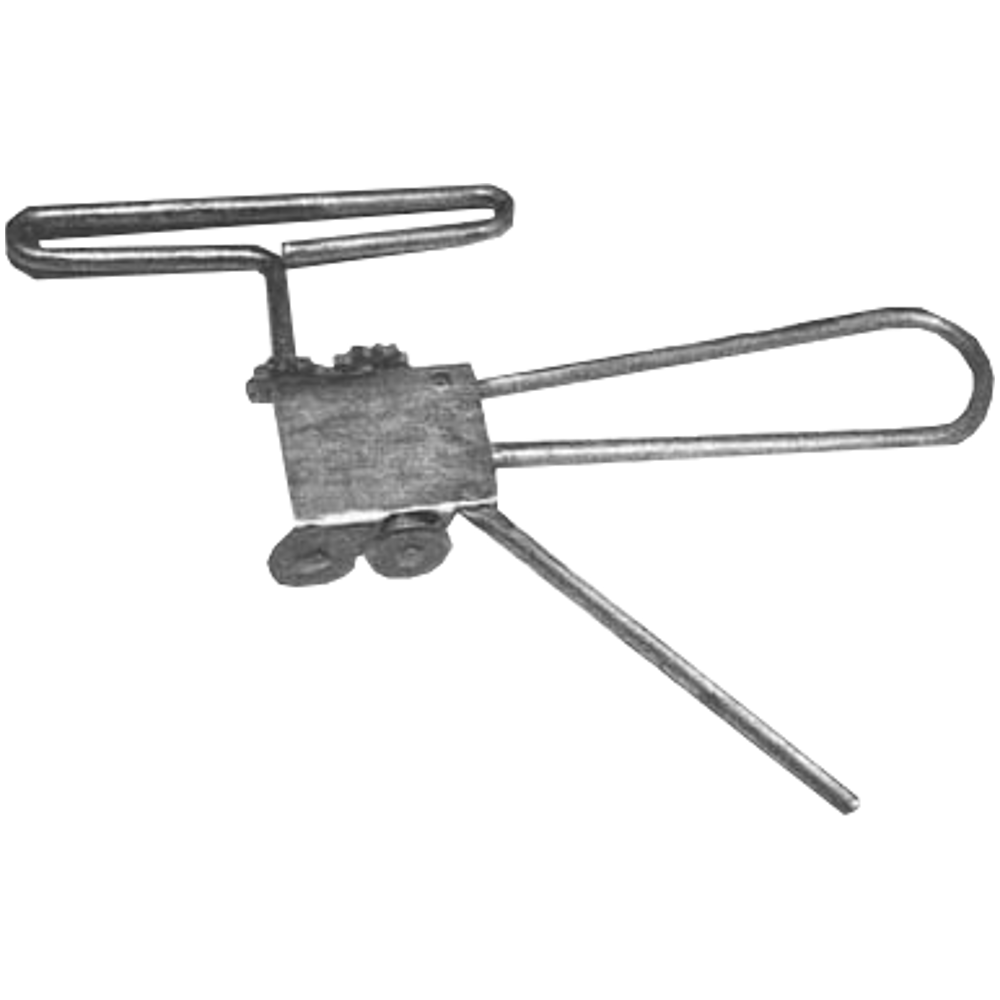
SCP-344 is a pre-19██ manual can opener that randomly transforms canned food contents into live organisms upon opening, violating conservation of mass by teleporting or generating creatures equal to the number used in production—often with lethal explosive force. Classified as Safe despite multiple fatalities, this anomalous kitchen tool represents one of the Foundation’s most deceptively dangerous artifacts, requiring high-security containment after a series of deadly “practical joke” incidents.
The 19██ Discovery: From War Spoils to Deadly Artifact
The Foundation’s acquisition of SCP-344 reads like a dark comedy turned tragedy. On February 1st, 19██, Sgt. Michael █████ returned home after participating in [REDACTED], carrying what he proudly called “spoils of war”—a seemingly ordinary can opener retrieved from an undisclosed conflict zone. His mother later testified that he expressed a craving for canned beef and produced the opener from his pocket with the casual confidence of a soldier who’d survived worse.
He didn’t survive the can.
The moment the lid fully separated, a ███-kilogram heifer materialized inside the can and exploded outward with devastating force, instantly crushing the sergeant to death. The sheer impossibility of the event—a full-grown cow emerging from a standard tin of processed beef—immediately flagged Foundation monitoring systems. Agent ████, already investigating a separate anomaly in the ███████ town, arrived within hours.
After conducting witness interviews and examining the scene, Agent ████ concluded the can opener itself was the anomalous object. He confiscated it, replacing it with a mundane facsimile to maintain normalcy, and transported the original to Site-██. The heifer that killed Sgt. █████ later underwent [DATA EXPUNGED], an event so catastrophic the Foundation covered the entire incident as a █████ missile strike.
The “spoils of war” context raises tantalizing questions: Was SCP-344 manufactured as an anomalous weapon? Did it exist in a military arsenal before 19██? Or did the sergeant simply loot it from a civilian location during conflict? The Foundation has never determined its true origin, but the pre-19██ manufacture date suggests it predates modern anomalous research programs.
Mechanical Properties & The Physics Paradox
SCP-344 functions as a standard ████-brand manual can opener—until it doesn’t. When used to open canned food, there exists a probability that the moment the lid fully separates, the processed contents transform into live versions of the source organisms. The mechanism follows a brutal mathematical logic: the number of living creatures released equals the number of individual organisms required to produce the can’s contents, provided each individual’s remains weigh above 0.██ mg.
A can of tuna containing genetic material from fifty fish? Fifty live tuna explode outward. A can of pork from a single pig? One full-sized hog materializes. The compression of these organisms into a space far smaller than their living volume creates immense pressure, turning the can into an improvised biological cannon. Test SCP-344-T5 recorded tuna launching at ███ km/h—fast enough to severely injure D-class personnel and penetrate standard containment barriers.
The probability mechanics defy statistical modeling. Theoretically, SCP-344 should manifest its effects 50% of the time—a simple binary outcome. Reality tells a different story:
- Sentient organisms: 3█.██% manifestation rate
- Non-sentient plant materials: 1█.██% manifestation rate
- [REDACTED] materials: ██.██% manifestation rate
Why the discrepancy? The Foundation has no definitive answer, but the pattern suggests SCP-344 “prefers” certain biological categories or responds to consciousness in ways current physics cannot explain.
The true paradox lies in where the organisms come from. Spontaneous regeneration would violate the law of conservation of mass and energy—matter cannot be created from nothing. Foundation researchers propose two primary theories:
Teleportation Hypothesis: SCP-344 identifies and teleports existing organisms from Earth’s biosphere to the can’s location. Test SCP-344-T15 strongly supports this—when researchers opened a can containing meat from a still-living Berkshire boar housed 3 kilometers away, the boar vanished in a burst of electromagnetic emissions and simultaneously launched from the can, fully healed from its harvesting injuries.
[REDACTED] Source Theory: The redacted alternative suggests something far more disturbing, possibly involving extra-dimensional sourcing or temporal manipulation. Given the emphasis in documentation that “[REDACTED] seems more likely” after Log-██ experiments, the Foundation may have confirmed a mechanism that challenges fundamental reality.
The 34-Hour Countdown: What Happens After Release
Every sentient organism released by SCP-344 operates on a ticking clock. Approximately 34 hours after manifestation, they undergo [DATA EXPUNGED]—an event so severe that Foundation protocol mandates immediate termination of all sentient creatures before this threshold. The heifer that killed Sgt. █████ experienced this transformation, necessitating a cover story involving military ordnance.
Critically, non-sentient plant materials do not undergo this change. Bean plants and cherry trees from Tests T8 and T9 remained stable indefinitely, showing no anomalous degradation or transformation. This distinction suggests SCP-344’s effects interact specifically with consciousness or nervous system complexity.
What happens at the 34-hour mark? The complete redaction indicates catastrophic consequences—possibly explosive biomass conversion, memetic contamination, or transformation into hostile entities. The temporal specificity (34 hours, not a round number like 24 or 48) hints at a biological or metaphysical process with precise parameters, similar to incubation periods in parasitic organisms or decay rates in unstable isotopes.
This time-sensitive danger places SCP-344 in a unique threat category: anomalies that create secondary hazards requiring active monitoring and intervention, not just passive containment.
Evolution of Containment: From Break Room Tragedy to High-Security
SCP-344’s containment classification evolved through blood and bureaucratic failure. Initially stored in low-security lockers with monthly password changes, the Foundation treated it as a curiosity rather than a weapon—a catastrophic underestimation.
On July █5, 19██, Dr. ████ entered Site-██’s break room for lunch. He selected a can of pork and, finding a can opener in the communal drawer, proceeded to open his meal. The can opener was SCP-344. The manifestation was immediate: a full-grown pig materialized and launched with lethal force, killing Dr. ████ instantly through crushing trauma.
The subsequent investigation never identified who placed SCP-344 in the break room. Was it a deliberate act of sabotage? A careless researcher who forgot to return it to containment? Or something more sinister—a test of Site security by internal affairs? The Foundation’s inability to solve this case exposed serious gaps in object tracking and personnel accountability.
The incident prompted immediate protocol revisions:
- Relocation from low-security to mid-security lockers
- Password rotation increased from monthly to weekly
- Access restrictions requiring Dr. ██████’s approval for research use
- Remote manipulation recommended for all testing
After Test SCP-344-T9, when ██ cherry trees exploded from a single can and killed D-8234 while damaging the opener itself, containment escalated again to high-security storage. The progression from “kitchen drawer” to “weekly-password vault” illustrates how the Foundation learns—often through preventable deaths.
Test Log Breakdown: The Most Dangerous Experiments
T5: The Dolphin-Free Lie
Opening a can of ██-███ tuna labeled “dolphin-free” produced sixty-seven tuna and one dolphin, all launching at ███ km/h. D-2856 suffered severe injuries from the biological shrapnel. The dolphin’s presence despite labeling claims suggests SCP-344 operates on objective reality, not marketing promises—it “knows” what organisms actually contributed to the can’s contents, exposing food industry deceptions with lethal precision.
T8-T9: When Plants Became Weapons
Researchers expected 900 individual beans from a can of ████’s beans. Instead, 324 complete bean plants erupted, burying the D-class operator. The discrepancy revealed SCP-344’s most fascinating property: it attempts to reconstruct original biological relationships. Beans from the same plant reunite as a single organism, suggesting the anomaly operates on genetic or metaphysical “memory.”
Test T9 escalated this danger exponentially. A can of ██████ cherries produced ██ full-sized cherry trees that exploded outward, killing D-8234 instantly and requiring outdoor testing to prevent Site-██ structural damage. The trees’ combined mass far exceeded the can’s contents, confirming massive violations of conservation laws. SCP-344 sustained minor damage (bent handle), proving even anomalous objects have physical limits.
T15: The Living Boar Protocol
This experiment definitively proved teleportation. Researchers harvested meat from a living Berkshire boar, ground it, canned it, and opened the can 3 kilometers from the boar’s holding cell. Upon manifestation, the boar vanished from its cell in a burst of electromagnetic radiation and simultaneously launched from the can—fully healed, as if the harvesting never occurred.
Then it became aggressive. When D-class personnel entered to contain it, the boar manifested [DATA REDACTED], forcing immediate termination protocols. The incident led to a formal recommendation against testing with living source organisms unless under “heavy containment and neutralization procedures.”
Information Gain: Theories & Unanswered Questions
SCP-344’s “memory” of biological relationships challenges our understanding of information storage in matter. When beans from the same plant reunite as a single organism, what mechanism preserves that connection after industrial processing, cooking, and canning? Does genetic material retain quantum entanglement across physical separation? Or does SCP-344 access some form of biological Akashic record—a metaphysical database of every organism’s history?
Test SCP-344-T12 remains completely redacted, involving “Human Remains.” The total information blackout suggests results so disturbing that even standard Foundation documentation protocols failed. Did it resurrect the dead? Create hostile humanoid entities? Reveal something about human consciousness that necessitated O5-level suppression? The silence speaks volumes about what the Foundation fears most.
The object’s pre-19██ manufacture and military acquisition context demand scrutiny. If SCP-344 is artificially created, it represents anomalous engineering far beyond modern capabilities—precision reality manipulation embedded in mundane hardware. If naturally occurring, why does it take the form of a branded consumer product? Perhaps it’s a parasitic anomaly that “infected” a normal can opener, similar to how SCP-012 corrupts musical compositions.
Cross-referencing with other teleportation SCPs reveals potential connections. SCP-106’s pocket dimension manipulation and SCP-507’s dimensional shifting both involve matter displacement, but neither demonstrates SCP-344’s selective biological targeting or mass violation scale. The closest parallel might be SCP-2217’s reality-restructuring properties, suggesting SCP-344 operates on localized reality rewriting rather than simple teleportation.
The 34-hour transformation timer implies SCP-344 doesn’t just move organisms—it fundamentally alters them during manifestation, installing a delayed secondary effect. This two-stage anomaly structure resembles memetic kill agents with incubation periods, raising the possibility that SCP-344 is a weapon system designed for delayed-action biological warfare.
Frequently Asked Questions
What happens if you open an empty can with SCP-344?
The documentation specifies SCP-344’s effects only manifest when opening cans containing food derived from organisms. An empty can or one containing non-biological contents (like motor oil) would likely open normally, though the Foundation has not published tests confirming this.
Why doesn’t SCP-344 work every time?
The probability discrepancy between theoretical (50%) and observed (3█% for sentient organisms) manifestation rates remains unexplained. Leading theories suggest consciousness level affects triggering, or that SCP-344 requires specific conditions not yet identified—possibly related to the opener’s “mood,” user intent, or quantum probability collapse.
Could SCP-344 be used to resurrect extinct species?
Theoretically yes, if canned food containing extinct organism remains could be obtained. However, Test T15 proved SCP-344 teleports living specimens rather than creating new ones, meaning extinct species with no living members couldn’t be retrieved. The Foundation has not attempted this due to containment risks and ethical concerns.
What’s the largest organism SCP-344 has produced?
The ███-kilogram heifer that killed Sgt. █████ remains the documented record, though Test T9’s ██ cherry trees collectively represented far greater biomass. The theoretical upper limit depends on industrial food processing—a can containing whale meat could potentially manifest a full-sized cetacean with catastrophic results.
Why is SCP-344 classified as Safe if it’s killed multiple people?
In Foundation terminology, “Safe” means predictably containable, not harmless. SCP-344 remains inert until actively used to open a can, making it controllable through simple storage protocols. Compare this to Euclid-class objects that require active monitoring or Keter-class entities that resist all containment—SCP-344’s lethality is situational, not autonomous.