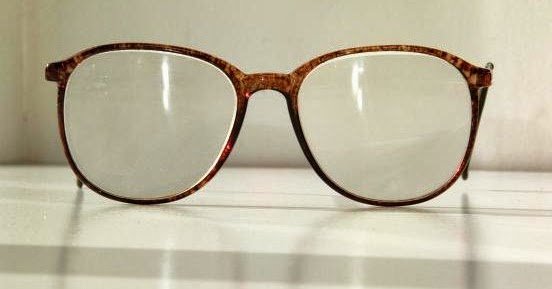
SCP-215 is a pair of prescription myopia-correcting glasses that induces irreversible paranoid delusions in wearers, causing them to perceive inanimate objects as sentient, malevolent entities capable of speech and hostile intent. The psychological deterioration progresses rapidly and persists even after removal, making it one of the Foundation’s most insidious cognitohazards.
The Psychology of Paranoia: How SCP-215 Rewrites Reality
SCP-215 operates through a sophisticated manipulation of human cognitive architecture, specifically targeting the brain’s pattern recognition systems and theory of mind mechanisms. When worn, the glasses trigger an immediate and catastrophic rewiring of perceptual processing that transforms the wearer’s relationship with their environment.
The anomaly exploits anthropomorphization—humanity’s innate tendency to attribute human characteristics to non-human entities. Under normal circumstances, this cognitive shortcut helps us navigate social situations and predict behavior. SCP-215 hijacks this mechanism, forcing the brain to apply social cognition frameworks to every object in the visual field.
Within minutes of exposure, subjects report hearing “whispers” from furniture, electronics, and everyday items. These auditory hallucinations aren’t random—they consistently express hostility, suspicion, and malicious intent toward the wearer. The voices accuse subjects of wrongdoing, threaten harm, and coordinate apparent “surveillance” activities.
Neurologically, SCP-215 appears to create permanent alterations in the temporal and parietal lobes, regions responsible for object recognition and social processing. The effect resembles drug-induced psychosis but with a critical difference: no pharmaceutical or amnestic intervention has successfully reversed the condition. The brain’s perceptual filters, once compromised, cannot be restored.
The progression follows a predictable trajectory. Initial exposure produces mild unease and the sensation of being watched. Within hours, subjects develop elaborate conspiracy theories about object collusion. By the 24-hour mark, full paranoid psychosis manifests, with subjects unable to distinguish between actual threats and perceived hostility from their surroundings. Some subjects have attempted to destroy “threatening” objects, while others withdraw into catatonic states to avoid interaction with their environment.
What makes SCP-215 particularly devastating is its permanence. Even after the glasses are removed, the perceptual rewiring persists indefinitely. Subjects continue experiencing the same auditory hallucinations and paranoid beliefs for the remainder of their lives, requiring permanent psychiatric care and isolation from environments with multiple objects.
Object Properties and Anomalous Characteristics
SCP-215 appears as an ordinary pair of prescription eyeglasses with wire frames and corrective lenses designed for myopic vision. Physical analysis reveals no unusual materials or construction methods—the frames are standard metal alloy, and the lenses are conventional optical glass with appropriate diopter measurements. This mundane appearance makes the object particularly dangerous, as nothing in its physical composition suggests anomalous properties.
The anomalous effect activates immediately upon wearing. Subjects with normal vision experience the expected visual correction for nearsightedness, but this optical function serves as a Trojan horse for the cognitive assault. The perceptual alterations begin within 30-90 seconds of initial contact with the eyes.
The “voices” subjects report follow consistent patterns across all documented cases. Objects don’t simply speak—they demonstrate apparent awareness of the subject’s thoughts, history, and vulnerabilities. A chair might reference childhood traumas. A telephone could threaten to reveal secrets. Kitchen knives invariably express violent intentions. This specificity suggests the anomaly accesses or fabricates information from the subject’s own memory, creating personalized psychological attacks.
The effect’s irreversibility represents its most troubling characteristic. Foundation researchers initially hypothesized that removing the glasses within the first few minutes might prevent permanent damage. Testing proved this assumption catastrophically wrong. Even subjects who wore SCP-215 for less than 60 seconds developed permanent paranoid delusions. The cognitive damage appears to occur instantaneously, with continued exposure merely intensifying the initial trauma rather than causing progressive deterioration.
Interestingly, the anomaly affects only the wearer. Observers watching someone wear SCP-215 notice behavioral changes but don’t experience any perceptual alterations themselves. This suggests a direct neurological interface rather than a memetic effect that could spread through observation or description.
Containment Protocol Analysis: Why Simple Storage Isn’t Enough
SCP-215 carries an Object Class designation of Safe, which often confuses personnel unfamiliar with Foundation classification systems. This rating doesn’t indicate the object is harmless—rather, it means the anomaly’s behavior is predictable and containment is straightforward. SCP-215 won’t spontaneously activate, breach containment, or seek out victims. It simply waits to be worn.
Current containment procedures require SCP-215 to be stored in a standard secure locker at Site-19. Access requires Level 2 authorization and written approval from at least two senior researchers. The simplicity of these measures reflects the object’s passive nature—it poses zero threat while stored.
However, the psychological screening protocols surrounding SCP-215 are extensive. Any personnel requesting access must undergo comprehensive psychiatric evaluation to identify underlying paranoid tendencies, schizophrenia spectrum disorders, or susceptibility to suggestion. Individuals with family histories of psychotic disorders are automatically disqualified from exposure.
The Foundation discontinued all testing with human subjects in 19██ after determining that no useful information justified the permanent psychological destruction of D-Class personnel. Previous experiments attempted to map the progression of symptoms, test potential countermeasures, and identify the mechanism of action. All failed to produce actionable intelligence while creating dozens of permanently psychotic individuals requiring lifelong care.
Risk assessment identifies the primary threat as accidental exposure by personnel unaware of the object’s nature. The glasses’ mundane appearance means someone might casually try them on during routine inventory or containment inspection. To mitigate this risk, SCP-215’s container features prominent warning labels in multiple languages, and all personnel assigned to Site-19 receive briefings on cognitohazardous objects that appear harmless.
Breach scenarios remain low-probability but high-consequence events. If SCP-215 escaped containment and entered civilian populations, the wearer would likely be institutionalized for psychosis before the anomalous nature was recognized. The greater danger lies in the object passing through multiple hands, creating a trail of permanently damaged individuals before Foundation recovery teams could intervene.
The 19██ Discovery and Initial Testing Tragedy
SCP-215 came to Foundation attention following a series of psychiatric hospitalizations in ████████, Oregon. Local mental health facilities reported an unusual cluster of patients presenting with identical paranoid delusions—specifically, the belief that inanimate objects were sentient and hostile. Standard antipsychotic medications proved completely ineffective.
Foundation agents embedded in the psychiatric community identified the common thread: all patients had recently visited the same optometry clinic. Investigation revealed that the clinic’s owner had recently acquired a box of vintage eyeglasses from an estate sale. SCP-215 was among them.
The optometrist himself had briefly tried on the glasses to check the prescription strength. Within hours, he began experiencing the characteristic symptoms but initially attributed them to stress and fatigue. He continued working for three days before his deteriorating mental state forced him to seek help. During that period, he had fitted SCP-215 to multiple patients whose prescriptions matched the lenses.
Foundation recovery teams secured SCP-215 and administered Class-A amnestics to all affected individuals in an attempt to erase the traumatic memories. The amnestics successfully removed memories of the clinic visit and the glasses themselves, but the perceptual alterations and paranoid delusions persisted unchanged. This outcome provided the first evidence that SCP-215’s effects operated at a level deeper than accessible memory.
Initial testing at Site-19 followed standard protocols for potentially hazardous objects. D-Class personnel D-8432 volunteered for the first controlled exposure in exchange for reduced sentence consideration. Researchers instructed him to wear the glasses for exactly 60 seconds while describing his experiences.
D-8432’s testimony remains one of the most disturbing documents in SCP-215’s file. He reported that the observation room’s furniture immediately began “screaming” at him. The table accused him of unspecified crimes. The chairs threatened to “tell everyone what you did.” The observation window claimed to be recording his thoughts for later broadcast. Within 45 seconds, D-8432 was hyperventilating and begging to remove the glasses.
Removal provided no relief. D-8432 continued hearing the voices with identical clarity. Over the following weeks, his condition deteriorated rapidly. He refused to enter rooms with furniture, ate only with his hands to avoid “hostile” utensils, and eventually became catatonic when placed in any environment containing objects. He required transfer to a specialized psychiatric facility where he remains to this day, decades later, still experiencing the same hallucinations.
Subsequent testing with other D-Class personnel produced identical results regardless of exposure duration, subject psychology, or environmental factors. The Foundation terminated the testing program after creating 23 permanently psychotic individuals without gaining any useful information about reversal methods or protective measures.
Cross-Reference: SCP-215 in the Broader Memetic Threat Landscape
SCP-215 occupies a unique position among the Foundation’s catalog of perception-altering anomalies. Unlike memetic hazards that spread through information transfer, SCP-215 requires direct physical contact to activate. This makes it more similar to cursed objects than infectious ideas.
Comparison with SCP-012 (“A Bad Composition”) reveals interesting parallels. Both objects induce compulsive, self-destructive behavior in subjects, and both effects prove resistant to amnestic treatment. However, SCP-012 drives subjects toward a specific action—completing the musical score—while SCP-215 creates a generalized perceptual distortion without directing behavior toward any particular goal.
SCP-1025 (“Encyclopedia of Diseases”) shares SCP-215’s property of inducing permanent psychological changes through visual exposure, but operates through suggestion and psychosomatic response rather than direct neurological alteration. Subjects reading SCP-1025 develop symptoms they believe they should have, while SCP-215 wearers experience effects completely disconnected from their expectations or beliefs.
The most relevant comparison involves SCP-████, a set of contact lenses that [REDACTED]. Both objects interface directly with the visual system to produce cognitive effects, suggesting a possible common origin or design principle. Dr. ████████ has proposed that SCP-215 might represent an early prototype or failed experiment in perception manipulation, with the paranoia-inducing effect being an unintended consequence rather than the primary design goal.
Theories about SCP-215’s origin remain speculative. The glasses show no signs of anomalous manufacture—no reality-bending construction techniques, no impossible materials, no embedded symbols or circuitry. This suggests either extremely sophisticated concealment of the anomalous mechanism or a naturally occurring phenomenon that spontaneously manifested in an ordinary object.
Some researchers theorize SCP-215 might be a “carrier object” for a memetic or cognitohazardous entity that requires physical proximity to the visual cortex to establish itself. Under this model, the glasses serve merely as a delivery system for something that exists in informational or conceptual space rather than physical reality.
The absence of similar objects in Foundation custody raises questions. Is SCP-215 unique, or are there other paranoia-inducing glasses circulating in civilian populations, their effects attributed to natural mental illness? The Foundation maintains surveillance of psychiatric facilities worldwide, monitoring for the characteristic symptom cluster, but no additional instances have been confirmed.
Frequently Asked Questions
Can SCP-215’s effects be reversed with advanced technology or anomalous means?
No reversal method has proven successful despite extensive research. The Foundation has attempted pharmaceutical interventions, surgical procedures, amnestic treatments of varying classes, and even exposure to reality-stabilizing anomalies. The perceptual alterations appear to represent permanent neurological restructuring that current science—both conventional and anomalous—cannot undo. Affected individuals require lifelong psychiatric care and typically cannot function in normal environments.
Why is SCP-215 classified as Safe if it causes permanent psychological damage?
The Safe classification refers to containment difficulty, not danger level. SCP-215 remains inert until someone deliberately wears it, making containment straightforward—simply store it securely and restrict access. By contrast, Euclid-class objects behave unpredictably or require complex containment, while Keter-class objects actively resist containment. Many Safe-class objects are extremely dangerous to humans but earn the classification because they don’t spontaneously breach containment or require elaborate procedures to keep secured.
Do the voices subjects hear come from the objects themselves or from the subject’s mind?
Evidence suggests the voices originate within the subject’s altered perception rather than from external sources. Audio recording equipment in testing chambers captures no sounds corresponding to what subjects report hearing. Additionally, the voices demonstrate knowledge of subjects’ personal histories and psychological vulnerabilities that inanimate objects couldn’t possess. The anomaly appears to hijack the brain’s internal monologue and social cognition systems, creating the illusion of external communication while actually generating content from the subject’s own neural activity.
Has anyone ever recovered from SCP-215 exposure, even partially?
No documented case of recovery exists in Foundation records. The longest-surviving affected individual has experienced continuous symptoms for over ██ years since initial exposure. Some subjects show slight adaptation—learning to ignore certain “voices” or developing coping mechanisms—but the underlying perceptual distortion never diminishes. The permanence of the effect suggests fundamental changes to brain structure rather than temporary chemical imbalances or psychological trauma that might heal over time.
Could SCP-215 be weaponized or used for interrogation purposes?
The Foundation has explicitly prohibited any consideration of SCP-215 for tactical or intelligence applications. The object’s effects are too severe, too permanent, and too unpredictable to serve any legitimate purpose. Subjects become completely unreliable for information gathering as their paranoid delusions contaminate all testimony. The ethical violations involved in deliberately inflicting permanent psychosis on any individual—even hostile combatants—exceed acceptable boundaries even by Foundation standards. SCP-215 remains classified as a containment-only object with no approved applications beyond scientific study.