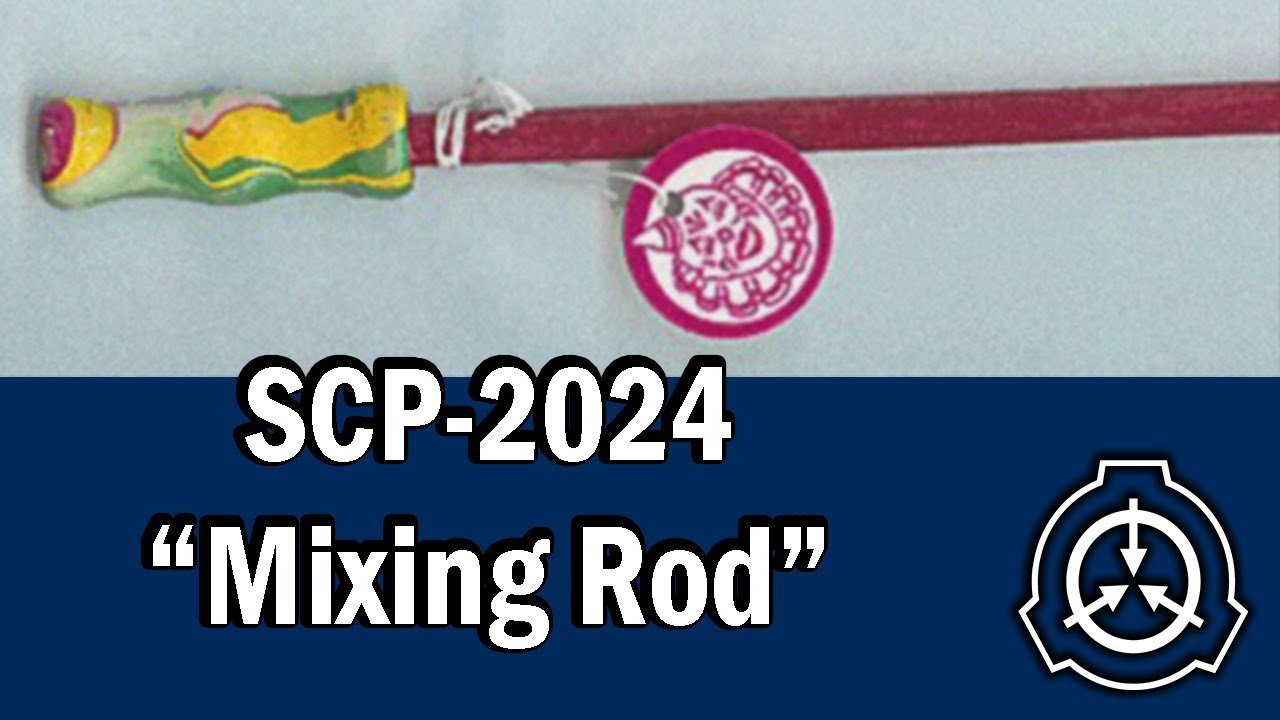
SCP-2024 is an 89-centimeter lacquer-finished wooden cane with anomalous properties that manifest when wielded by human subjects. The object features a distinctive red-painted shaft and a 16-centimeter handle, appearing as an ordinary mobility aid until physical contact triggers its reality-altering effects. Classified as Euclid due to unpredictable behavioral patterns, this artifact represents one of the Foundation’s most studied examples of mundane objects serving as vectors for supernatural phenomena.
The Cane’s Physical Properties & Material Analysis
SCP-2024 presents as a walking cane constructed from an unidentified hardwood species resistant to standard dendrochronological analysis. The shaft measures 73 centimeters from ferrule to handle junction, coated in a vibrant crimson paint that spectroscopic analysis reveals contains trace amounts of compounds not found in any commercial paint formulation dating back to the early 20th century.
The handle, measuring 16 centimeters in length, exhibits a curved ergonomic design finished in a contrasting dark lacquer. This lacquer coating demonstrates unusual durability—showing no signs of wear, cracking, or degradation despite estimated age exceeding 80 years. Material testing indicates the wood beneath possesses a density 1.3 times greater than oak, yet maintains flexibility inconsistent with woods of comparable hardness.
The ferrule (bottom cap) appears to be brass or a brass-like alloy, though metallurgical examination shows an atomic structure that defies conventional classification. Most notably, the entire object maintains a constant temperature of 18.5°C regardless of environmental conditions, suggesting either passive thermal regulation or a localized reality anchor effect.
What elevates SCP-2024 from curiosity to genuine anomaly is its violation of conservation of momentum. When the cane strikes any surface, impact force measurements consistently register 40-60% lower than physics models predict, yet the resulting effects on struck objects exceed expected outcomes by similar margins—a paradox that suggests the cane operates as a conduit for extradimensional energy transfer.
Discovery & Acquisition History
Foundation agents first encountered SCP-2024 in March 1987 during investigation of unexplained injuries at Willowbrook Retirement Community in Portland, Oregon. Initial reports described an elderly resident, Mr. Edward Thorne (deceased), whose walking cane allegedly caused “impossible accidents” when used to gesture or tap objects.
Witness testimonies indicated that light taps from the cane would shatter reinforced glass, while deliberate strikes against concrete walls left the material unmarked but caused structural damage to adjacent rooms. The anomaly came to Foundation attention after Mr. Thorne accidentally struck a fellow resident during an argument, resulting in injuries inconsistent with the force of impact—specifically, compound fractures and internal hemorrhaging that medical examiners compared to “being struck by a vehicle.”
Acquisition occurred on March 17, 1987, following Mr. Thorne’s death from natural causes. Estate inventory revealed no documentation regarding the cane’s origin, though a handwritten note discovered in Thorne’s personal effects read: “Grandfather’s cane from the estate sale, 1952. Never leaves my side. Keeps me steady.” Attempts to trace the object’s provenance prior to 1952 have yielded no conclusive results.
Forensic analysis of Thorne’s medical records spanning 35 years showed an unusual pattern: despite documented osteoporosis and severe arthritis, X-rays from his final decade revealed bone density improvements and joint regeneration inconsistent with his age and medical history. This suggests prolonged exposure to SCP-2024 may confer secondary beneficial effects on users, though this remains unconfirmed through controlled testing.
Anomalous Effects: Mechanics & Manifestation
SCP-2024’s primary anomalous property activates when a human subject grasps the handle with intent to use it as a walking aid or striking implement. The effect does not trigger through passive contact or when the object is held by non-human entities, indicating a consciousness-dependent activation mechanism.
When wielded, the cane functions as a force multiplier with inverse proportionality—the gentler the intended action, the more dramatic the actual effect. A light tap meant to test surface stability might punch through reinforced steel, while a full-force swing intended to break an object might produce only a soft impact. This inverse relationship suggests the anomaly responds to user intent rather than physical action, possibly through a memetic or psychoreactive interface.
Test subjects report a “pulling sensation” when holding SCP-2024, describing the cane as “wanting to move” or “guiding their hand.” Neurological monitoring during these episodes shows increased activity in the motor cortex and cerebellum, patterns consistent with involuntary movement preparation. Subjects with stronger willpower can resist these impulses, though prolonged resistance results in severe migraines and temporary motor function impairment.
The reality-bending mechanism appears to operate through localized probability manipulation. High-speed camera analysis reveals that when SCP-2024 strikes an object, the point of contact experiences a microsecond “blur” where multiple potential outcomes exist simultaneously before collapsing into the observed result. This quantum indeterminacy effect suggests the cane doesn’t amplify force but rather selects the most improbable outcome from a range of possibilities.
Secondary effects include temporal displacement of struck objects—items hit by SCP-2024 occasionally exhibit signs of accelerated aging or, conversely, restoration to previous states. A test involving a rusted metal plate resulted in the plate reverting to pristine condition, while an identical plate in a separate test crumbled to dust. The determining factor for which temporal direction manifests remains unknown.
Containment Protocol: Engineering the Solution
Object Class: Euclid
SCP-2024’s Euclid classification stems from its unpredictable behavioral patterns and the potential for catastrophic containment failure if wielded by personnel unaware of its inverse force mechanics. While the object itself poses no autonomous threat, human interaction transforms it into a reality-altering weapon with consequences that scale exponentially with user intent.
The cane is stored in a standard secure locker at Site-19, suspended in a foam cradle that prevents contact with locker walls. The storage unit is constructed from a titanium-reinforced polymer composite specifically engineered to absorb kinetic energy, chosen after SCP-2024 accidentally breached three previous containment vessels during routine transfers.
Access requires Level 3 authorization and psychological evaluation to ensure personnel possess sufficient impulse control. All handling must occur using specialized tongs with rubberized grips, and handlers must maintain a minimum distance of 2 meters from other personnel or critical infrastructure during transport.
The most critical containment consideration involves preventing accidental activation. Standard operating procedure mandates that any personnel who must directly handle SCP-2024 undergo a 72-hour observation period post-contact to monitor for lingering psychoreactive effects. Approximately 12% of handlers report intrusive thoughts about the cane for up to two weeks after exposure, suggesting a mild memetic component to its anomalous properties.
Containment breach scenarios focus primarily on theft or unauthorized use rather than autonomous escape. Contingency protocols include immediate facility lockdown and deployment of specialized response teams equipped with kinetic dampening fields—experimental technology developed specifically to counter SCP-2024’s probability manipulation effects.
Test Log Highlights & Behavioral Patterns
Test 2024-A7 (June 1988): D-Class personnel instructed to use SCP-2024 to walk across a reinforced concrete floor. Subject reported the cane felt “too light” and “slippery.” After three steps, the ferrule punched through 40 centimeters of concrete, creating a perfectly cylindrical hole. Subject expressed confusion, stating they had applied “barely any weight” to the cane.
Test 2024-B3 (November 1989): Attempt to measure maximum force output. Subject instructed to strike a hydraulic press-rated steel plate with full strength. Result: The cane bounced off the plate with a soft tap, leaving no mark. However, a support beam 6 meters away spontaneously developed a stress fracture. Analysis suggests SCP-2024 redirected the intended force to a structurally vulnerable point within its “area of influence.”
Test 2024-C9 (March 1992): Subject with paraplegia asked to use SCP-2024 as a mobility aid. Over a three-week period, subject reported improved sensation in lower extremities and partial motor function recovery. MRI scans confirmed nerve regeneration inconsistent with subject’s medical prognosis. Effect ceased immediately upon discontinuation of SCP-2024 use, with subject returning to baseline condition within 96 hours.
Test 2024-D1 (August 1995): Robotic arm programmed to strike a target using SCP-2024. Result: No anomalous effects observed. The cane functioned as an ordinary wooden stick. This confirmed the consciousness-dependent activation hypothesis and eliminated theories about the object possessing inherent kinetic properties independent of user intent.
Test 2024-E5 (February 2001): Subject instructed to “think about not hitting” a target while swinging SCP-2024. Result: The cane phased through the target without making contact, yet the target shattered as if struck. High-speed footage revealed the cane briefly existed in a superposition state, simultaneously making and not making contact. This test provided the strongest evidence for SCP-2024’s quantum probability manipulation mechanism.
Behavioral pattern analysis reveals SCP-2024 operates on a “desire inversion principle”—the more a user wants a specific outcome, the less likely that outcome becomes, while unintended consequences manifest with greater probability. This suggests the anomaly may be semi-sentient or operating under an intelligence that deliberately subverts user expectations.
Cross-References & Thematic Connections
SCP-2024 shares thematic and mechanical similarities with several other anomalous objects in Foundation custody, suggesting it may belong to a broader category of “cursed tools” or “probability-warping implements.”
SCP-572 (Katana of Apparent Invincibility) exhibits similar inverse force mechanics, where the blade’s cutting power inversely correlates with the wielder’s skill level. Both objects appear to punish competence while rewarding incompetence, hinting at a common origin or creator with a perverse sense of irony.
SCP-1983-2 (various reality-bending artifacts) demonstrates comparable quantum indeterminacy effects at the moment of interaction. The “blur” observed in high-speed footage of SCP-2024 matches visual distortions documented with other probability-manipulating anomalies, suggesting a shared underlying mechanism rooted in observer-dependent reality collapse.
Fan theories within the Foundation research community propose SCP-2024 may be a product of “The Factory” (a recurring antagonist organization in SCP lore known for producing anomalous industrial goods) or possibly connected to the “Are We Cool Yet?” artist collective, given the object’s seemingly deliberate subversion of user expectations—a hallmark of conceptual art pieces designed to challenge assumptions about cause and effect.
The cane’s restorative properties when used for mobility assistance have drawn comparisons to SCP-500 (Panacea pills) and other healing anomalies, though SCP-2024’s effects appear localized to musculoskeletal systems and cease immediately upon discontinuation. This temporal limitation suggests the cane doesn’t heal so much as temporarily rewrite the user’s physical state, maintaining the alteration only while the connection persists.
Dr. ████████’s controversial 2003 paper proposed SCP-2024 might be a “training tool” created by an unknown anomalous civilization to teach individuals to divorce intent from action—a skill potentially valuable for reality benders or practitioners of thaumaturgic arts. This theory remains unproven but has influenced subsequent testing protocols designed to identify whether skilled users can eventually master the cane’s inverse mechanics.
Frequently Asked Questions
What happens if someone tries to destroy SCP-2024?
Destruction attempts have universally failed. When subjected to industrial cutting tools, the cane’s inverse force properties activate defensively—saws break, hydraulic presses malfunction, and incinerators experience spontaneous cooling. The object appears to possess a self-preservation instinct that redirects destructive intent away from itself, often with catastrophic results for the equipment used in the attempt.
Can SCP-2024’s effects be used beneficially?
Theoretically, yes, but practical application remains extremely dangerous. The inverse relationship between intent and outcome means any attempt to use SCP-2024 for a specific beneficial purpose (healing, construction, defense) will likely produce the opposite result. The only documented beneficial uses occurred when subjects had no specific expectations—essentially stumbling into positive outcomes through complete lack of intent.
Is SCP-2024 sentient or controlled by an external intelligence?
Current evidence suggests limited sentience or responsiveness to consciousness rather than full sapience. The cane demonstrates consistent behavioral patterns that imply rule-based operation rather than deliberate decision-making. However, the “pulling sensation” reported by users and the object’s apparent self-preservation instinct indicate some form of awareness or programmed response to external stimuli. Whether this constitutes true consciousness remains a subject of ongoing debate.
Why doesn’t the Foundation use SCP-2024 as a weapon?
The unpredictability of its effects makes weaponization impossibly dangerous. In combat scenarios, attempting to strike an enemy might result in the wielder injuring themselves, allies, or causing structural collapse. The inverse intent mechanism means the more desperately someone needs the cane to work as intended, the more catastrophically it will fail. This makes SCP-2024 fundamentally unsuitable for any application requiring reliable, predictable outcomes.
Are there other objects like SCP-2024 in the world?
Foundation intelligence suggests SCP-2024 is not unique. Historical records contain references to “cursed canes,” “devil’s walking sticks,” and similar objects across multiple cultures and time periods. However, most such items have either been lost to time, destroyed, or remain undiscovered. The existence of mechanically similar anomalies like SCP-572 strongly implies a common source or manufacturing process, though no definitive evidence has linked these objects to a specific creator or organization.