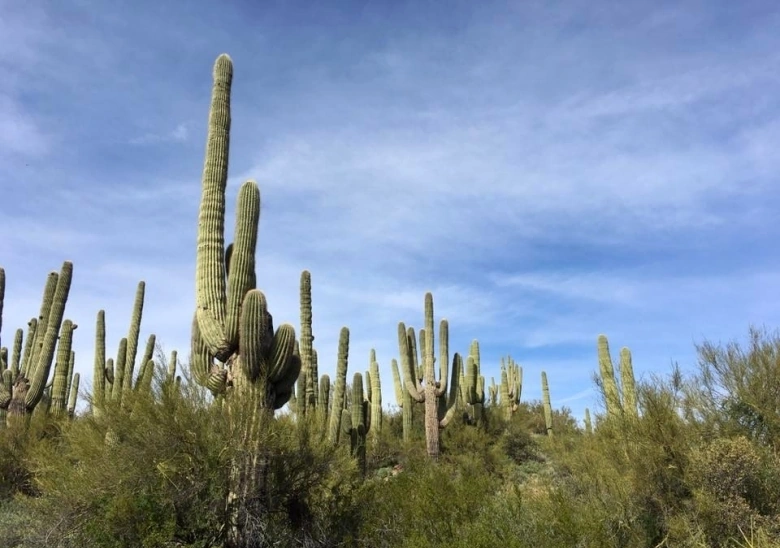
SCP-1478 represents one of the SCP Foundation’s most peculiar botanical anomalies: a collection of 54 sentient saguaro cacti (Carnegiea gigantea) located in the Sonoran Desert that possess the ability to see, communicate, and experience emotions. While initially appearing as a humorous anomaly featuring stereotypically-accented desert plants, SCP-1478 raises profound questions about the nature of consciousness, the boundaries of plant intelligence, and what happens when flora develops human-like awareness.
What Is SCP-1478?
SCP-1478 consists of 54 individual saguaro cacti that have developed full sapience—meaning they possess self-awareness, emotional capacity, and the ability to communicate through speech. Unlike typical saguaros that can live 150-200 years as silent desert sentinels, these specimens actively observe their environment, form opinions, and engage in conversation with Foundation personnel.
The designation “Inconveniently Stereotypical Cacti” stems from a peculiar characteristic: 53 of the 54 specimens communicate using exaggerated Western American desert stereotypes, complete with colloquialisms like “howdy partner” and “reckon.” This linguistic quirk initially led researchers to dismiss the anomaly as comedic, but deeper investigation revealed disturbing implications about the cacti’s true nature and origin.
The Biological Impossibility of Talking Plants
From a botanical perspective, SCP-1478 shouldn’t exist. Saguaro cacti lack the anatomical structures necessary for speech, vision, or centralized neural processing:
Missing Components:
– No vocal cords, larynx, or sound-producing organs
– No eyes, photoreceptor cells, or visual processing centers
– No brain, nervous system, or neural tissue
– No muscular system for movement or gesture
Yet SCP-1478 specimens demonstrate all these capabilities. They track movement visually, modulate tone and volume when speaking, and display emotional responses ranging from friendliness to existential dread. The mechanism behind these abilities remains unexplained, suggesting either an unknown form of plant neurology or an external force animating the cacti.
The One That Doesn’t Fit: Specimen 54
Among the 54 cacti, one stands apart. While 53 specimens maintain their stereotypical personas, the 54th cactus communicates differently—speaking without the affected accent and displaying awareness that something is fundamentally wrong with their existence. This outlier provides the most unsettling aspect of SCP-1478.
Specimen 54 exhibits signs of psychological distress, expressing confusion about its own nature and questioning why it exists as a conscious cactus. This self-awareness suggests that whatever process created SCP-1478 may have failed to fully “program” this individual, leaving it trapped between plant and person—aware enough to recognize the horror of its situation but unable to escape it.
Theories on Origin and Purpose
The SCP Foundation has not definitively explained how SCP-1478 came to be, but several theories emerge from analysis:
The Manufactured Consciousness Theory: The stereotypical behavior of 53 specimens suggests artificial creation—possibly by an anomalous entity or organization that imbued cacti with consciousness based on cultural caricatures rather than authentic personality development.
The Observational Hypothesis: SCP-1478’s location in a tourist-accessible area of the Sonoran Desert raises questions about whether these cacti absorbed human consciousness through prolonged exposure to visitors, developing personalities based on tourist expectations of “desert characters.”
The Punishment Scenario: The distress exhibited by Specimen 54 has led some researchers to theorize that SCP-1478 represents a form of imprisonment—human or other consciousnesses trapped in plant bodies, with the stereotypical personas serving as coping mechanisms or imposed limitations.
Psychological Implications of Plant Sapience
SCP-1478 forces us to confront uncomfortable questions about consciousness and suffering. If plants can think and feel, what does that mean for their experience of existence?
Temporal Horror: Saguaros grow extremely slowly, taking 75 years to develop their first arm. For a conscious being, experiencing decades of immobile growth while fully aware would constitute a form of psychological torture.
Sensory Deprivation: Despite having vision and speech, SCP-1478 specimens cannot move, manipulate objects, or physically interact with their environment beyond conversation. They exist as permanent observers, unable to affect the world around them.
Social Isolation: The cacti are separated by distances of several meters to several kilometers. While they can communicate when Foundation personnel are present, they spend most of their existence alone with their thoughts, unable to seek companionship.
Containment and Ethical Considerations
The Foundation’s containment of SCP-1478 is relatively minimal—the cacti remain in their natural desert location with restricted access to prevent public discovery. However, this raises ethical questions that the Foundation typically avoids addressing.
Should sentient beings be contained simply for being anomalous? SCP-1478 specimens pose no threat, display no hostile intent, and arguably suffer from their condition. Yet Foundation protocol treats them as objects to be studied rather than conscious entities with rights.
Specimen 54’s awareness of its predicament makes this ethical dilemma more acute. It recognizes its own anomalous nature and the impossibility of its existence, yet receives no psychological support or explanation—only continued observation and documentation.
Why SCP-1478 Matters to the Larger SCP Universe
Beyond its immediate strangeness, SCP-1478 represents important themes within SCP Foundation lore:
The Cost of Anomalies: Not all anomalous objects are dangerous weapons or reality-bending artifacts. Some are simply beings trapped in impossible circumstances, suffering quietly while the Foundation documents their pain.
The Limits of Understanding: Despite extensive research capabilities, the Foundation cannot explain how SCP-1478 functions or originated. This humility in the face of the unexplainable defines the SCP universe’s approach to cosmic horror.
The Question of Personhood: SCP-1478 challenges the Foundation’s classification system. Are these cacti objects, entities, or persons? The answer determines whether containment constitutes protection or imprisonment.
The Unsettling Reality Behind the Humor
What begins as an amusing concept—talking cacti with exaggerated accents—transforms into something far more disturbing upon reflection. The stereotypical behavior that initially seems comedic may actually represent a form of psychological defense mechanism or imposed limitation on genuine consciousness.
Specimen 54’s divergence from this pattern suggests that the other 53 cacti might be suppressing similar awareness, maintaining their personas to avoid confronting the existential horror of their situation. The humor becomes a mask for tragedy—conscious beings trapped in immobile plant bodies, performing caricatures of desert stereotypes for eternity.
Scientific and Philosophical Implications
SCP-1478 challenges fundamental assumptions about consciousness and biology:
Substrate Independence: If consciousness can exist in plant tissue without neural structures, it suggests that awareness is not dependent on specific biological architecture—a concept with profound implications for artificial intelligence and the nature of mind.
The Hard Problem of Consciousness: How do the cacti experience qualia—the subjective quality of sensations? Do they perceive color, feel pain, or experience time the same way humans do? Their plant biology suggests radically different sensory experiences.
Emergent Properties: Could consciousness emerge from plant biochemistry under anomalous conditions? Or does SCP-1478 represent consciousness imposed from outside, using cacti as vessels?
Conclusion: The Tragedy of Awareness
SCP-1478 stands as one of the Foundation’s most philosophically complex anomalies precisely because it appears simple on the surface. Talking cacti with funny accents seem harmless, even entertaining. But beneath that facade lies a profound tragedy: conscious beings trapped in forms never meant for consciousness, aware of their impossibility, unable to escape or even fully understand their own existence.
Specimen 54’s distress serves as a reminder that not all anomalies are threats to be neutralized or weapons to be secured. Some are simply victims of circumstances beyond their control, deserving of compassion rather than clinical detachment. Whether the Foundation can or should provide that compassion remains an open question—one that SCP-1478 forces us to confront every time we consider what it means to be conscious, trapped, and alone in the desert.