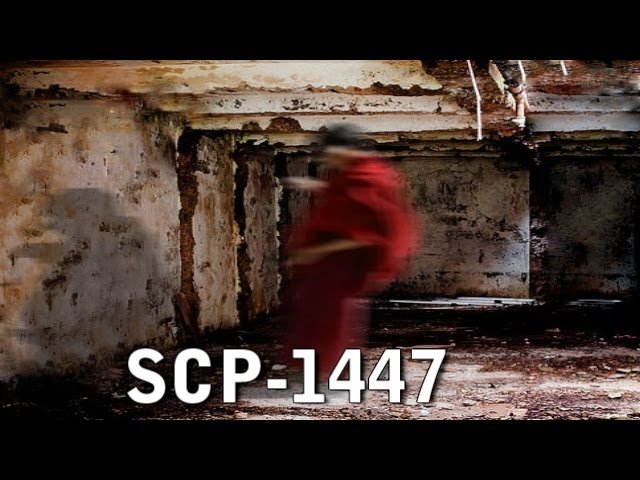
SCP-1447, classified as Keter, consists of two interconnected entities: SCP-1447-1, a quasi-physical tulpa manifesting as a murderous Tibetan monk, and SCP-1447-2, the human who accidentally created it through meditation. The anomaly represents a self-sustaining cognitive threat where a thought-form entity relentlessly pursues its creator across any distance, making separation the only viable containment strategy.
The Tulpa Phenomenon: What Makes SCP-1447 Unique
In Tibetan Buddhist tradition, a tulpa is a being or object created through spiritual practice and intense concentration—essentially, thought made manifest. Practitioners would spend years visualizing an entity until it achieved independent existence, capable of being perceived by others and interacting with physical reality.
SCP-1447-1 perverts this ancient practice into something nightmarish. Unlike traditional tulpas that serve as spiritual companions or teaching tools, this entity emerged with a singular, unbreakable directive: kill its creator. The monk-like figure appears as an Asian male in traditional Buddhist robes, but its face remains visually distorted—a detail that suggests the creator’s meditation was incomplete or corrupted at a fundamental level.
What makes this tulpa particularly dangerous is its quasi-physical nature. SCP-1447-1 exists in a state between pure thought and material reality, allowing it to bypass conventional physical barriers while still being able to inflict lethal harm. It doesn’t eat, sleep, or tire. It simply hunts, with a focus that makes even the most dedicated Foundation agents seem distracted by comparison.
The entity demonstrates perfect tracking ability regardless of distance or obstacles. Whether SCP-1447-2 is moved to a different continent, placed in a Faraday cage, or surrounded by reality anchors, SCP-1447-1 adjusts its trajectory within moments. This suggests the connection between creator and creation operates on a level deeper than physical space—possibly through quantum entanglement of consciousness or a metaphysical link that transcends conventional dimensions.
The Creator and His Creation: SCP-1447-2’s Fatal Mistake
SCP-1447-2 was a practitioner of advanced Tibetan meditation techniques, specifically those involving the creation of tulpas. Historical records recovered by the Foundation indicate he spent approximately three years in intensive visualization practice, attempting to manifest a spiritual guide based on classical Buddhist iconography.
The psychological profile suggests someone driven by spiritual ambition rather than malice. He sought enlightenment through traditional means, unaware that his mental state during the final stages of creation was compromised. Foundation psychologists theorize that intrusive thoughts, suppressed anger, or existential fear during the critical manifestation phase corrupted the tulpa’s core programming.
The moment SCP-1447-1 achieved independent existence, it turned on its creator with immediate hostility. Unlike gradual personality shifts seen in other thought-form entities, this one emerged fully formed with murderous intent. SCP-1447-2’s attempts to dissolve or reabsorb the entity failed completely—once given independent existence, the tulpa could not be unmade by the same consciousness that created it.
What this reveals about human consciousness is disturbing: our thoughts, when given sufficient focus and belief, can achieve autonomous existence beyond our control. SCP-1447-2 essentially gave birth to his own executioner, and no amount of meditation, counter-visualization, or psychological intervention can sever the connection. He is permanently bound to his creation, forever the target of its singular obsession.
The Eternal Hunt: How Obsession Becomes Containment
The Foundation’s containment strategy for SCP-1447 is brilliantly simple: exploit the entity’s obsession as a self-perpetuating prison. By keeping SCP-1447-1 and SCP-1447-2 separated by maximum distance and multiple containment layers, the entity remains in a constant state of pursuit but never reaches its target.
SCP-1447-1 moves at approximately 5 kilometers per hour when unobstructed, adjusting its path with perfect accuracy toward SCP-1447-2’s location. The entity can phase through most solid matter but appears to be slowed by dense materials and certain electromagnetic fields. Containment facilities use this property to create “friction zones” that delay but don’t stop the entity’s progress.
The psychological horror of this arrangement falls entirely on SCP-1447-2. He lives in a secure facility knowing that his own creation is perpetually moving toward him, that every containment breach brings it closer, and that his death might not even end the threat. Foundation ethicists have debated whether this constitutes cruel and unusual treatment, but the alternative—allowing the entity to complete its mission—could result in unpredictable consequences.
What happens if SCP-1447-1 succeeds? Would it dissipate, having fulfilled its purpose? Would it seek a new target? Could it be “inherited” by another consciousness? These questions keep containment specialists awake at night, because the only way to find answers is through catastrophic failure.
The quasi-physical nature of SCP-1447-1 presents unique challenges. It can be temporarily disrupted by high-energy electromagnetic pulses, causing it to “reset” several kilometers away from its last position. However, it reconstitutes within minutes and immediately resumes pursuit. Physical weapons pass through it harmlessly, and attempts to contain it in traditional cells have failed—it simply phases through walls as if they were suggestions rather than barriers.
Cognitive Threat Assessment: The Memetic Danger Nobody Discusses
The true danger of SCP-1447 extends far beyond one murderous thought-form. The Foundation’s deepest concern is replication. If one meditation practitioner accidentally created an unkillable hunter, what prevents others from doing the same?
Research into SCP-1447’s creation suggests that the conditions required are disturbingly common among serious meditation practitioners: extended isolation, intense visualization practice, and a moment of psychological vulnerability during manifestation. Thousands of people worldwide engage in these practices daily. The Foundation has implemented monitoring protocols for meditation centers and Buddhist monasteries, watching for signs of tulpa manifestation.
The memetic component is subtle but insidious. Knowledge of SCP-1447’s existence could inspire copycat attempts, either by practitioners seeking to test their abilities or by hostile groups attempting to weaponize the phenomenon. Information suppression is critical, yet the entity’s existence is difficult to completely hide given the extensive containment infrastructure required.
Could SCP-1447-1 be transferred to another host if SCP-1447-2 dies? Theoretical models suggest three possibilities: the entity dissipates, having lost its anchor to reality; it becomes a free-roaming threat seeking any human target; or it bonds to the nearest consciousness that acknowledges its existence, creating a new hunter-prey relationship. None of these outcomes are acceptable.
The connection to other reality-bending SCPs is significant. SCP-1447 demonstrates that human consciousness can directly alter physical reality through sustained belief and visualization. This places it in the same category as Type-Green reality benders, but with a crucial difference: the effect is externalized and autonomous rather than controlled by the originator. It’s reality bending with a time-delay fuse.
Theoretical scenarios explored by Foundation researchers include mass tulpa creation events. What if a cult of 100 practitioners simultaneously created hostile thought-forms? What if a government weaponized the technique? The cognitive arms race implications are staggering. Unlike nuclear weapons, tulpa creation requires no materials, no infrastructure—just knowledge, discipline, and belief.
Incident Analysis: Close Calls and Containment Breaches
Incident 1447-Alpha occurred six months after initial containment when a power failure disabled electromagnetic barriers for 47 minutes. SCP-1447-1 advanced 4.2 kilometers before backup systems engaged. It reached the outer perimeter of SCP-1447-2’s facility, close enough that the creator reported feeling an overwhelming sense of dread and the temperature in his cell dropped by 15 degrees Celsius.
The entity was observed attempting to phase through the reinforced containment door, its form flickering between solid and translucent states. Security footage shows its distorted face pressed against the barrier, mouth moving in what lip-readers identified as Tibetan mantras—possibly the same phrases SCP-1447-2 used during its creation. The electromagnetic pulse that finally disrupted it required three times the normal power output, suggesting the entity grows stronger in proximity to its target.
Incident 1447-Gamma revealed a disturbing adaptation. During a routine containment transfer of SCP-1447-2, the entity altered its trajectory mid-pursuit, demonstrating predictive capability. It didn’t follow the transport vehicle’s actual path but instead moved toward the destination facility before the convoy arrived. This suggests SCP-1447-1 doesn’t just track current location but perceives intent or future position through the metaphysical link.
The closest call occurred during Incident 1447-Omega when a containment breach of an unrelated SCP caused facility-wide evacuation. In the chaos, SCP-1447-1 advanced to within 200 meters of SCP-1447-2. Witnesses reported the entity moving faster than previously recorded, its form becoming more solid and defined. SCP-1447-2 suffered a complete psychological breakdown, screaming that he could “feel it inside his mind” and begging personnel to “let it finish.”
Emergency protocols required sedating SCP-1447-2 and deploying a mobile electromagnetic disruption unit. The entity was reset 50 kilometers away, but the incident prompted a complete overhaul of containment procedures. The psychological impact on SCP-1447-2 was permanent—he now requires constant psychiatric care and anti-anxiety medication to prevent self-harm attempts.
The Philosophy of Self-Created Nightmares
SCP-1447 embodies a terrifying philosophical principle: we are responsible for what we create, even when creation exceeds our control. The Buddhist concept of karma becomes horrifyingly literal—SCP-1447-2’s spiritual ambition manifested as his eternal punishment.
In Buddhist philosophy, all phenomena arise from mind. Thoughts shape reality through the accumulation of karmic patterns. SCP-1447 demonstrates this principle stripped of metaphor and made concrete. The creator’s mind birthed something real, autonomous, and hostile. There is no cosmic undo button, no appeal to higher powers. The thought-form exists because he believed it into existence, and that belief cannot be retracted.
This raises uncomfortable questions about consciousness and responsibility. If our focused thoughts can create independent entities, what ethical obligations do we have to control our mental processes? Should meditation practices capable of manifesting tulpas be regulated like dangerous technologies? Can we be held accountable for creations that emerge from our subconscious without conscious intent?
The horror of SCP-1447 is not just physical but existential. SCP-1447-2 cannot escape himself. The entity hunting him is literally made from his own consciousness, his own mental energy given form and purpose. Killing it would be like trying to destroy your own shadow by attacking the darkness. The connection is fundamental, woven into the fabric of his being.
For the Foundation, SCP-1447 represents a category of threat that cannot be neutralized through conventional means. You cannot kill an idea. You cannot imprison a thought. You can only manage the manifestation and hope the underlying connection never finds a way to complete itself.
Expert FAQ: Understanding the Tulpa Anomaly
Can SCP-1447-1 be destroyed?
All attempts to destroy SCP-1447-1 have failed. Physical weapons pass through it, energy weapons cause temporary disruption but not permanent damage, and reality anchors only slow its movement. The entity appears to be sustained by the metaphysical connection to its creator rather than any physical process. Theoretical models suggest only the death of SCP-1447-2 might dissolve it, but this remains untested due to ethical concerns and uncertainty about the outcome.
What happens if SCP-1447-2 dies?
Unknown, and the Foundation is not eager to find out. Three possibilities exist: the entity dissipates, having lost its anchor; it becomes a free-roaming threat; or it bonds to a new host. Given the catastrophic potential of the latter two scenarios, keeping SCP-1447-2 alive is considered essential to containment. He receives excellent medical care and protection from all threats except the one he created.
Is SCP-1447-1 sentient or just a programmed construct?
Evidence suggests limited sentience. The entity demonstrates problem-solving ability, adapts to containment measures, and shows predictive capability. However, it appears incapable of communication or deviation from its core directive. Think of it as a highly sophisticated autonomous weapon system with a single target and no off switch. Whether it experiences anything resembling consciousness or emotion remains unknown.
How does this compare to other thought-form SCPs?
SCP-1447 is unique in its hostility and autonomy. Other thought-form entities in Foundation custody typically require ongoing belief or observation to maintain existence. SCP-1447-1 is self-sustaining, requiring no external faith or attention. This makes it more dangerous than tulpas that fade when forgotten and more persistent than entities that can be reasoned with or contained through memetic countermeasures.
Could the Foundation weaponize tulpa creation?
Absolutely not, and any personnel suggesting this are immediately flagged for psychological evaluation. The uncontrollable nature of tulpa manifestation makes it unsuitable for weaponization. You cannot guarantee the thought-form will target enemies rather than creators, cannot control its behavior once manifested, and cannot destroy it if something goes wrong. SCP-1447 serves as a permanent reminder of why some knowledge should remain theoretical.
Why is SCP-1447 classified as Keter rather than Euclid?
The Keter classification reflects the impossibility of permanent containment and the catastrophic potential if containment fails. SCP-1447-1 cannot be stopped, only delayed. It will pursue its target forever, adapting to countermeasures and growing stronger in proximity to SCP-1447-2. The entity represents an existential threat not just to one individual but to the Foundation’s understanding of consciousness-based anomalies. If the creation process can be replicated, humanity faces a threat that cannot be fought with conventional means.