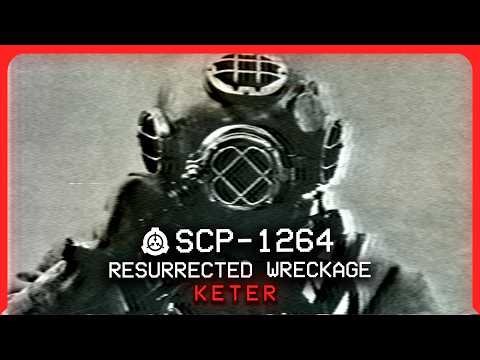
SCP-1264 is a Keter-class anomaly consisting of amalgamated WWII-era warships bound together by organic secretions produced by sea-cucumber-like entities. This semi-submersible structure exhibits collective intelligence, adaptive learning capabilities, and predatory behavior, making it one of the Foundation’s most challenging maritime containment operations.
The Wreckage Graveyard: What is SCP-1264?
SCP-1264 represents a nightmarish fusion of naval history and biological horror. The anomaly consists of five derelict World War II warships—vessels that should have rusted peacefully on the ocean floor—now welded into a single, mobile structure by organic adhesive compounds. This isn’t simple barnacle growth or coral encrustation. The binding agent is a deliberately secreted biological glue that fuses steel hulls, gun turrets, and deck plating into a cohesive superstructure.
The entity operates as a semi-submersible platform, capable of adjusting its buoyancy to lurk just beneath the surface or rise to engage targets. Unlike conventional shipwrecks that settle into predictable decay patterns, SCP-1264 actively incorporates new flotsam and jetsam into its structure. Debris from modern vessels, shipping containers, and even pieces of destroyed Foundation patrol boats have been observed adhering to the main body within hours of contact.
The architectural impossibility of SCP-1264 defies naval engineering principles. The amalgamated ships maintain structural integrity despite lacking proper welds, rivets, or conventional joining methods. The organic secretions penetrate microscopic fissures in the metal, creating molecular-level bonds stronger than the original hull plating. This adaptive construction allows the entity to repair battle damage and expand its mass continuously.
The Organic Intelligence: Biology of the Secretions
The biological component controlling SCP-1264 consists of entities designated SCP-1264-1: organisms resembling oversized sea cucumbers measuring between 2-4 meters in length. These creatures inhabit the interior spaces of the amalgamated vessels, moving through flooded compartments and creating a distributed nervous system throughout the structure.
SCP-1264-1 instances produce the adhesive secretions through specialized glands located along their dorsal surfaces. Chemical analysis reveals a protein-based compound with anomalous properties that allow it to bond organic tissue to inorganic materials. The secretion remains viscous for approximately 15 minutes after excretion, during which time SCP-1264-1 instances manipulate debris into desired positions before the compound hardens into a substance with tensile strength exceeding military-grade epoxy.
The collective behavior of SCP-1264-1 instances suggests a hive intelligence or shared consciousness. Individual organisms coordinate their movements with precision impossible for creatures lacking centralized neural structures. When Foundation forces damaged one section of SCP-1264 during containment operations, SCP-1264-1 instances from across the entire structure converged on the breach site within minutes, secreting repair compounds in coordinated patterns.
Research indicates SCP-1264 exhibits learning behavior. Early containment attempts using depth charges proved initially effective, but subsequent attacks showed the entity had adapted evasive maneuvers. The structure now submerges to depths exceeding 400 meters when detecting sonar pings associated with military ordnance, a response pattern not observed in the first six months of monitoring.
Keter Classification & Maritime Containment Challenges
SCP-1264’s Keter classification stems from its mobility, intelligence, and the catastrophic consequences of containment failure. Unlike stationary anomalies that can be secured in reinforced facilities, SCP-1264 roams international waters, crossing territorial boundaries and threatening civilian shipping lanes.
Current containment protocols require a 50-kilometer exclusion zone maintained by Foundation naval assets disguised as various national coast guard and research vessels. This perimeter must shift constantly to track SCP-1264’s movements, which follow no predictable pattern. The entity has demonstrated awareness of containment efforts, occasionally testing perimeter defenses or attempting to lure patrol boats into ambush positions.
Maritime containment presents unique diplomatic complications. When SCP-1264 enters territorial waters, the Foundation must coordinate with national governments under various cover stories—environmental hazard zones, naval exercises, or unexploded ordnance surveys. The entity’s 2019 incursion into Indonesian waters required emergency deployment of MTF Gamma-6 (“Deep Feeders”) and resulted in a three-week media blackout operation.
The semi-submersible nature of SCP-1264 complicates detection and tracking. Standard maritime radar proves unreliable when the entity operates at periscope depth. The Foundation employs a network of underwater acoustic sensors, satellite thermal imaging, and embedded tracking devices fired into the structure during engagement operations. Even with these measures, SCP-1264 has evaded containment forces for periods exceeding 72 hours on multiple occasions.
The 1264-D-2 Incident: When the Wreckage Hunts
The most devastating encounter with SCP-1264 occurred during incident 1264-D-2, when the entity attacked the cruise ship MS Coral Dream in the South Pacific. The after-action report reveals a calculated assault that demonstrated SCP-1264’s predatory intelligence and tactical sophistication.
At 0347 hours, SCP-1264 surfaced directly beneath the cruise ship, using its amalgamated superstructure to puncture the hull in multiple locations. SCP-1264-1 instances breached the lower decks, secreting adhesive compounds that sealed emergency bulkheads and trapped passengers in flooding compartments. Survivors reported seeing “massive slug-like creatures” moving through corridors with disturbing coordination.
Foundation response teams arrived within 90 minutes, but by then SCP-1264 had already begun incorporating sections of the cruise ship into its structure. Mobile Task Force personnel engaged SCP-1264-1 instances in close-quarters combat within the sinking vessel, suffering 40% casualties. The entities demonstrated unexpected aggression, using their adhesive secretions as weapons to immobilize personnel before dragging them into flooded sections.
Of the 847 passengers and crew aboard MS Coral Dream, only 63 survived. The Foundation distributed a cover story attributing the disaster to a catastrophic engine fire—a narrative supported by planted evidence and strategic media manipulation. Families of the deceased received compensation through shell companies, and survivors underwent Class-B amnestic treatment to remove memories of SCP-1264-1 instances.
The incident revealed SCP-1264’s capability for premeditated hunting behavior. Analysis of the entity’s approach vector indicated it had tracked the cruise ship for at least 18 hours before attacking, maintaining a depth and distance that avoided detection by the vessel’s navigation systems. This level of strategic patience suggests intelligence far beyond simple predatory instinct.
Radio Transmissions from the Deep: Communication Attempts
Perhaps the most unsettling aspect of SCP-1264 involves the radio transmissions emanating from within the structure. Foundation monitoring stations have recorded dozens of broadcasts on various maritime frequencies, all originating from SCP-1264’s location.
The transmissions consist of human voices speaking English, Japanese, and German—languages corresponding to the nationalities of the original warships. The voices use naval terminology and radio protocols accurate to World War II era communications. Most messages are fragmented distress calls or tactical reports, as if the speakers remain unaware the war ended decades ago.
One recurring transmission has become particularly significant to researchers: “Drown with me boys.” This phrase appears in multiple recordings, spoken by different voices but always with identical inflection and timing. Linguistic analysis suggests the speakers are not reading from a script but rather expressing a genuine emotional state—specifically, a combination of resignation and camaraderie.
Foundation attempts to communicate with SCP-1264 via radio have produced mixed results. In 2017, Dr. Yuki Tanaka successfully established two-way contact with an entity identifying itself as “Seaman Hiroshi Nakamura” of the Imperial Japanese Navy. The conversation lasted 47 minutes before abruptly terminating. Nakamura described being “part of the ship” and expressed confusion about the current year, insisting it was still 1944.
Subsequent communication attempts have been less successful. Some transmissions respond to Foundation queries with hostility, threatening to “send you to the bottom” or “add your ship to the fleet.” Others ignore attempts at contact entirely, continuing to broadcast their fragmented messages into the void.
The prevailing theory among Foundation researchers suggests SCP-1264 may contain or replicate the consciousness of sailors who died aboard the original vessels. Whether these represent genuine human minds, memetic echoes, or sophisticated mimicry by SCP-1264-1 instances remains unconfirmed.
Historical Echoes: WWII Wrecks and Anomalous Resurrection
The five warships comprising SCP-1264’s core structure have been identified through hull markings and architectural features: USS Fletcher (DD-445), IJN Fubuki, HMS Acheron, KMS Z20 Karl Galster, and an unidentified Soviet destroyer. All five vessels were confirmed sunk during World War II naval engagements in the Pacific theater between 1942-1945.
Historical records indicate these ships sank in locations separated by thousands of kilometers. The USS Fletcher went down near Guadalcanal, while IJN Fubuki was lost during the Battle of Cape Esperance. The mechanism by which these wrecks converged into a single anomalous entity remains unknown, though several theories have emerged.
Dr. Elizabeth Marsh’s “Resonance Hypothesis” proposes that intense emotional trauma—specifically the mass casualties experienced during naval warfare—can create memetic contamination in physical objects. According to this theory, the combined deaths of thousands of sailors in the Pacific theater generated a psychic residue that eventually manifested as SCP-1264. The entity would thus represent a collective haunting, with SCP-1264-1 instances serving as physical manifestations of the dead sailors’ will to continue fighting.
An alternative explanation suggests SCP-1264 resulted from a failed anomalous weapons project. Declassified documents reveal both Axis and Allied powers experimented with paranormal warfare during WWII. The “Resurrection Protocol” theory posits that one nation attempted to reanimate sunken vessels using biological agents, creating SCP-1264 as an unintended consequence.
Foundation archaeologists have discovered anomalous artifacts within SCP-1264’s structure during boarding operations. These include navigation charts marked with symbols matching no known naval code, personal effects from sailors who survived the war and died decades later, and equipment manufactured after the ships’ historical sinking dates. These anachronistic elements suggest SCP-1264 may exist partially outside normal temporal flow or actively draws objects from multiple time periods.
The entity’s behavior patterns show concerning parallels to other war-related anomalies in Foundation custody. SCP-1264 exhibits the same territorial aggression and tactical coordination observed in SCP-████ (a regiment of World War I soldiers existing in a perpetual battle state) and shares biological characteristics with SCP-████ (a fungal colony that reanimates military equipment). This suggests a broader category of conflict-born anomalies that deserve systematic study.
Frequently Asked Questions
Can SCP-1264 be destroyed?
Complete destruction of SCP-1264 has proven unfeasible with current Foundation resources. Conventional weapons cause temporary damage that SCP-1264-1 instances repair within hours. Nuclear options have been considered but rejected due to the entity’s mobility and the environmental consequences of detonating atomic weapons in international waters. Current strategy focuses on containment and tracking rather than termination.
How many SCP-1264-1 instances exist within the structure?
Population estimates range from 200 to 500 individual organisms, though exact counts are impossible due to the flooded, labyrinthine interior of the amalgamated ships. The population appears stable, suggesting SCP-1264-1 instances either reproduce at replacement rates or the entity maintains a fixed number through unknown means.
Has SCP-1264 ever been successfully contained in a facility?
No. SCP-1264’s size (approximately 340 meters in length), mobility, and aquatic nature make facility-based containment impossible. The entity requires ocean depths for survival and would likely breach any artificial containment structure. Mobile containment protocols remain the only viable approach.
What happens to people absorbed by SCP-1264?
Individuals captured by SCP-1264-1 instances during attacks are typically found incorporated into the structure, their remains encased in the organic adhesive. Post-mortem analysis indicates death by drowning in most cases. Some bodies show signs of partial digestion, suggesting SCP-1264-1 instances may consume human tissue. No living captives have been recovered from SCP-1264’s interior.
Are there other entities like SCP-1264?
Foundation records contain references to similar maritime anomalies, though none match SCP-1264’s scale or complexity. SCP-████ (a sentient oil tanker) and SCP-████ (a colony of anomalous barnacles that control host vessels) share certain characteristics but lack the biological-mechanical integration and apparent consciousness displayed by SCP-1264. The entity remains unique in Foundation classification systems.