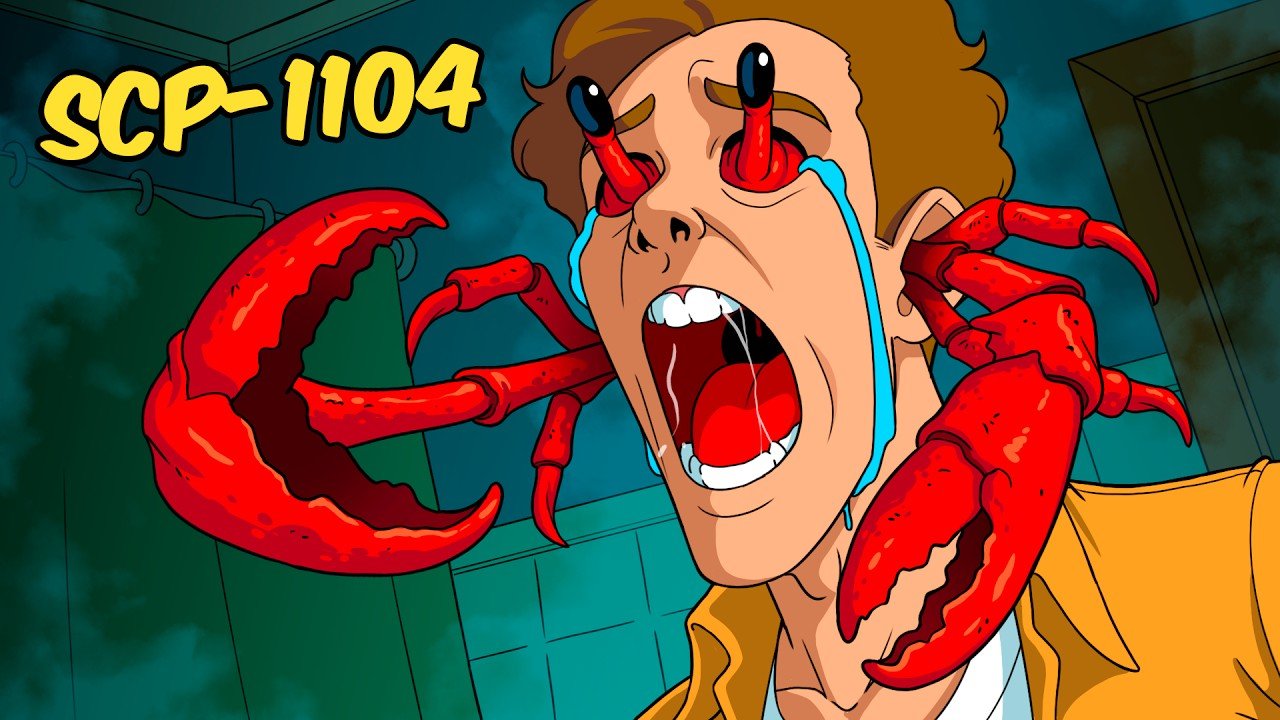
SCP-1104 is a Keter-class parasitic chelicerate species that infiltrates human nasal cavities, undergoes complete metamorphosis within the host’s sinus system, and manipulates neurological functions to ensure its survival and reproduction. Unlike conventional parasites, SCP-1104 demonstrates anomalous behavioral control mechanisms that suppress host awareness while preserving motor functions, making it one of the Foundation’s most insidious biological threats.
The Parasitoid Life Cycle: From Larva to Nightmare
SCP-1104’s developmental cycle represents a horrifying fusion of natural parasitoid biology and anomalous adaptation. The organism begins as microscopic larvae, typically introduced through inhalation of contaminated air from subsurface environments. Once inside the nasal cavity, larvae anchor themselves to the mucous membranes and begin rapid cellular division.
The maturation phase spans approximately 14-21 days, during which the organism develops its characteristic chelicerate anatomy within the confined space of the human sinus system. Unlike terrestrial crabs that molt externally, SCP-1104 absorbs calcium and other minerals directly from the host’s bloodstream, constructing its exoskeleton in situ. This process causes minimal physical discomfort—a deliberate evolutionary adaptation that prevents early detection.
What distinguishes SCP-1104 from natural parasitoids like the emerald cockroach wasp or Cordyceps fungi is its preservation of host viability. While jewel wasps permanently disable their prey’s escape response, SCP-1104 maintains full host functionality until the final emergence phase. The creature doesn’t simply hijack the nervous system—it integrates with it, creating a symbiotic neural interface that allows precise behavioral modification without tissue destruction.
The emergence phase represents the most traumatic stage. Mature specimens, reaching sizes comparable to juvenile Japanese spider crabs despite their chelicerate classification, force their way through the nasal passages and facial sinuses. The host experiences this as catastrophic structural failure of the facial bones, yet documented cases show victims remain conscious and ambulatory throughout the process—a testament to SCP-1104’s neurological manipulation capabilities.
Host Manipulation & Neurological Hijacking
The mechanism by which SCP-1104 controls human behavior represents one of parasitology’s most sophisticated examples of neural hijacking. Research indicates the organism secretes a complex cocktail of neuropeptides and anomalous proteins that cross the blood-brain barrier and selectively bind to regions controlling threat assessment, pain perception, and help-seeking behavior.
Infected individuals exhibit a phenomenon Foundation neurologists term “parasitic anosognosia”—a complete inability to recognize their infestation despite obvious physical symptoms. Hosts report feeling “slightly congested” even as mature specimens occupy their entire sinus cavity. This isn’t simple pain suppression; it’s targeted cognitive blindness that prevents the formation of accurate internal body maps.
The neurological interface operates bidirectionally. While SCP-1104 suppresses awareness of its presence, it simultaneously enhances behaviors that ensure its survival. Infected hosts demonstrate increased preference for dark, enclosed spaces—mimicking the subsurface environments where SCP-1104 naturally reproduces. They avoid medical facilities and resist attempts by others to examine their nasal passages, often becoming agitated or aggressive when confronted.
Most disturbing is the preservation of higher cognitive functions. Hosts continue working, maintaining relationships, and performing complex tasks while harboring a growing parasitoid in their skull. This suggests SCP-1104 doesn’t simply override the brain—it edits specific neural pathways while leaving others intact, demonstrating an understanding of human neurology that shouldn’t exist in a non-sapient organism.
Classification & Containment Protocol Analysis
SCP-1104 holds Keter classification due to its combination of high infectivity, difficult detection, and potential for exponential population growth. The Keter designation reflects not just the organism’s danger to individual hosts, but its capacity to establish self-sustaining populations in human communities before detection occurs.
Containment protocols focus on environmental isolation rather than individual specimen management. All known subsurface access points in the northwestern geological formations are sealed with reinforced concrete and monitored continuously. Air filtration systems prevent larval dispersal, while thermal imaging detects unauthorized excavation attempts that might breach containment.
Infected individuals require immediate quarantine in negative-pressure biological containment cells. Standard procedure involves surgical extraction before the emergence phase, though this carries significant risk—premature removal triggers aggressive host-preservation responses from the parasite, including the release of neurotoxins that can cause permanent brain damage. The Foundation maintains a careful balance between early intervention and allowing sufficient maturation for safe extraction.
Personnel working in affected regions undergo mandatory weekly nasal endoscopy examinations. The protocol’s frequency reflects SCP-1104’s rapid development cycle and the catastrophic consequences of missing an infection. Class-B amnestics are administered to extracted hosts to prevent psychological trauma from the awareness of what grew inside them.
The Northwestern Subsurface Ecosystem
SCP-1104’s endemic habitat consists of limestone cave systems and abandoned mining tunnels throughout the Pacific Northwest, primarily concentrated in areas with specific geological characteristics: high humidity, stable temperatures between 12-15°C, and the presence of certain mineral deposits that appear to support larval development.
Foundation geological surveys suggest the primary SCP-1104 population numbers in the hundreds of thousands, possibly millions, distributed across an underground network spanning multiple states. The organism’s natural hosts remain unknown—no native subsurface fauna show evidence of SCP-1104 infestation, leading researchers to theorize humans represent an opportunistic secondary host rather than the intended target.
The discovery of SCP-1104 occurred following a cluster of unexplained facial trauma cases in spelunking communities during the 1970s. Initial investigations attributed incidents to cave-ins or equipment failures until autopsy of a deceased victim revealed a fully mature specimen still embedded in the cranial cavity. Subsequent exploration of the caves where victims had been exposed led to the identification of the primary population.
What makes this ecosystem particularly concerning is its stability. Unlike surface parasitoids that face seasonal variations and predator pressure, SCP-1104 exists in a nearly ideal environment with minimal natural threats. The population appears to be expanding, with new infestation clusters appearing in previously unaffected cave systems—suggesting either natural migration or human-mediated dispersal.

Documented Infestation Cases & Behavioral Patterns
Case Study 1104-A involved a 34-year-old geologist who spent three weeks surveying limestone formations. Initial symptoms presented as mild sinus pressure, which the subject attributed to altitude changes. By day 12, colleagues noted the subject’s increasing preference for working in unlit sections of caves and reluctance to return to base camp. Thermal imaging revealed a developing specimen occupying 60% of the maxillary sinus cavity. Despite visible facial asymmetry, the subject insisted nothing was wrong and became hostile when medical evaluation was suggested. Extraction occurred on day 19, two days before projected emergence.
Case Study 1104-F demonstrated the parasite’s ability to modify social behavior. The infected individual, a 28-year-old cave rescue volunteer, began recruiting others to explore “newly discovered” passages—passages that geological surveys confirmed led directly to high-concentration SCP-1104 zones. This represents possible evidence of reproductive strategy manipulation, where the parasite influences host behavior to expose new potential hosts, similar to how Toxoplasma gondii alters rodent behavior to facilitate transmission to cats.
The most disturbing documented case involved a Foundation researcher who concealed their infection for 17 days, actively sabotaging containment protocols and attempting to introduce contaminated air samples into Site-19’s ventilation system. Post-extraction interviews revealed the subject had full awareness of their actions but felt “compelled” to ensure SCP-1104’s survival, describing the imperative as “more important than personal safety or professional duty.” This suggests advanced stages of infection may involve direct manipulation of priority hierarchies in human decision-making.
Evolutionary Mysteries & Cross-Species Implications
The taxonomic classification of SCP-1104 as Chelicerata presents a biological paradox. True chelicerates—spiders, scorpions, horseshoe crabs—lack the complex parasitoid life cycles observed in SCP-1104. The organism’s morphology suggests convergent evolution with decapod crustaceans, particularly the Japanese spider crab, yet genetic analysis confirms chelicerate ancestry. This impossible combination indicates either anomalous evolutionary pressure or deliberate biological engineering.
One prevailing theory suggests SCP-1104 represents a “bridge species” between marine chelicerates and terrestrial parasitoids, possibly originating from deep-sea environments before adapting to subsurface terrestrial ecosystems. The creature’s requirement for high humidity and its calcium-absorption mechanisms support this hypothesis. However, this fails to explain the sophisticated neurological manipulation capabilities, which exceed anything observed in natural parasites by orders of magnitude.
Comparative analysis with other parasitic SCPs reveals disturbing patterns. SCP-1104 shares behavioral control mechanisms with SCP-████ (a fungal entity that manipulates ant colonies) and demonstrates neural interface capabilities similar to SCP-████ (classified). Some researchers propose these entities represent different expressions of a common anomalous principle—a “parasitic template” that manifests across multiple biological kingdoms. If true, SCP-1104 might be one instance of a broader phenomenon, with undiscovered variants potentially affecting other host species.
The most unsettling possibility is that SCP-1104’s current form represents an intermediate stage in ongoing evolution. The organism’s rapid adaptation to human hosts, its expanding range, and its increasingly sophisticated behavioral manipulation suggest active optimization. Foundation evolutionary biologists warn that without aggressive containment, SCP-1104 could develop capabilities that render current protocols obsolete—potentially including extended dormancy periods, airborne transmission, or resistance to surgical extraction.
Frequently Asked Questions
Can SCP-1104 be detected before symptoms appear?
Early detection remains challenging due to the parasite’s neurological suppression of awareness. Standard medical imaging (X-rays, CT scans) can identify mature specimens, but larvae are too small for conventional detection. The Foundation employs specialized endoscopic procedures combined with biochemical markers in nasal secretions for personnel screening. Civilian populations lack access to these diagnostic tools, making community outbreaks difficult to identify until emergence events occur.
What happens if SCP-1104 is left untreated?
Untreated infections culminate in violent emergence, typically resulting in catastrophic facial trauma, severe hemorrhaging, and potential death from shock or secondary infection. Survivors face permanent disfigurement and neurological damage from both the physical trauma and the sudden cessation of the parasite’s neural manipulation, which often triggers severe psychological breaks as hosts suddenly become aware of what they harbored.
Is there a cure or vaccine for SCP-1104 infection?
No vaccine exists due to the organism’s anomalous properties and the lack of conventional immune response during infection. Treatment requires surgical extraction, ideally performed between days 15-18 of infection when the specimen is mature enough to remove safely but hasn’t begun the emergence process. Experimental antiparasitic compounds show limited efficacy and carry risk of triggering premature emergence or neurotoxin release.
How does SCP-1104 compare to real-world parasites?
While SCP-1104 shares superficial similarities with parasitoids like jewel wasps or hairworms, its neurological manipulation capabilities far exceed natural organisms. Real parasites typically use simple chemical signals to modify basic behaviors. SCP-1104 demonstrates targeted cognitive editing, preserving complex functions while suppressing specific awareness—a level of precision that suggests either millions of years of specialized evolution or artificial design.
Why is SCP-1104 classified as Keter rather than Euclid?
The Keter classification reflects SCP-1104’s combination of factors: rapid reproduction, difficult detection, high infectivity, and potential for self-sustaining population establishment outside containment. Unlike Euclid-class entities that remain contained with standard protocols, SCP-1104 requires constant active suppression to prevent exponential spread. A single containment breach could establish new populations in unexplored cave systems, creating permanent infestation zones beyond Foundation control.