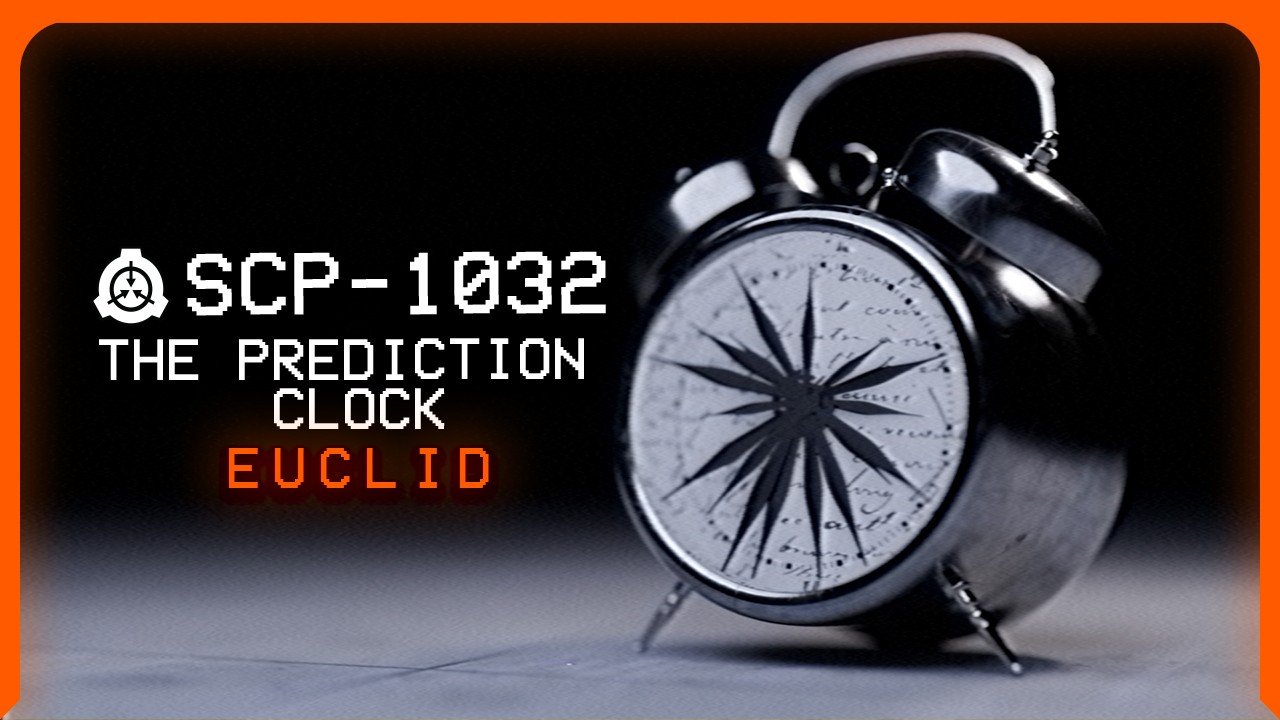
SCP-1032 is a silver alarm clock with 26 hands that predicts future events by pointing to inscribed labels on its face. Each hand moves at different speeds corresponding to event significance—the slower the movement, the more catastrophic the predicted occurrence. The Foundation monitors it continuously, bearing the psychological burden of knowing tragedies they cannot prevent.
The Anatomy of a Temporal Artifact
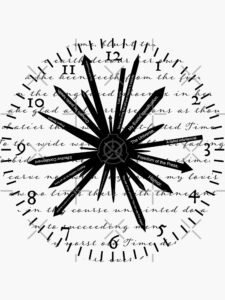
SCP-1032 appears as an ordinary alarm clock constructed from silver, plastic, and glass. What makes it extraordinary are the 26 hands of varying lengths and thicknesses that rotate across its face, each moving independently at different speeds. The clock face bears no numbers—instead, inscribed labels describe future events in plain English.
The choice of silver as the primary material raises questions within Foundation research circles. Silver has historical associations with reflection, prophecy, and temporal manipulation in anomalous objects. Some researchers theorize the metal acts as a temporal conductor, allowing the clock to interface with future timelines. The glass face remains unmarked despite decades of observation, suggesting either anomalous durability or self-repair properties.
Each hand corresponds to a specific predicted event. The inscriptions appear spontaneously, replacing previous text once an event occurs. The mechanism by which these labels manifest remains unknown—no internal machinery explains the predictive capability. X-ray analysis reveals standard clock components that should not function in the manner observed.
How the Prediction Mechanism Works
SCP-1032 operates on an inverse relationship between hand speed and event magnitude. Rapidly moving hands indicate minor, localized events—a researcher’s coffee spilling, a containment door malfunction. These predictions prove accurate within minutes or hours. Slower hands point to events of increasing significance: facility-wide incidents, regional disasters, global catastrophes.
The most disturbing aspect involves SCP-1032-02, a designation given to the slowest-moving hand. This hand currently points to an inscription reading “The worst thing that will ever happen to anybody.” Its movement is so gradual that Foundation instruments cannot measure its progress. Calculations suggest it may take centuries or millennia to reach its predicted date—or it may never arrive at all.
The predictive accuracy rate stands at 100% for all events that have reached their predicted dates. No intervention has successfully prevented a predicted occurrence. This suggests either a fixed timeline model where the future cannot be altered, or that the clock’s predictions create a causal loop ensuring their own fulfillment. The Foundation has attempted to destroy SCP-1032 multiple times, but each attempt fails due to unforeseen circumstances—equipment malfunctions, personnel errors, or sudden containment breaches requiring immediate attention.
The Darkest Predictions: A Chronicle of Dread
SCP-1032 gained widespread attention within the anomalous community when one hand predicted “2020” would end on January 1, 2022. This prediction, made years in advance, sparked numerous theories about temporal displacement and the subjective nature of calendar years. When 2020 arrived with its cascade of global crises, Foundation personnel monitoring the clock reported severe psychological distress.
Other documented predictions include:
A hand that pointed to “The day Dr. ████████ stops believing” reached its date three hours before the researcher suffered a complete mental breakdown after witnessing a containment failure. Despite psychiatric intervention, the researcher never recovered their previous optimism about Foundation work.
Another inscription read “When Site-19 goes dark” and predicted a date six months in advance. Security protocols were tripled, backup generators tested weekly, and personnel remained on high alert. On the predicted date, a previously unknown SCP caused an electromagnetic pulse that disabled all electronics simultaneously. The site went dark for 47 minutes.
The hand labeled “The last time anyone laughs at this” moved slowly toward a date still three years away. Personnel who read this inscription report persistent anxiety and an inability to find humor in daily life. The memetic effect of knowing laughter has an expiration date proves psychologically devastating.
The Containment Paradox: Should We Look?
Foundation ethics committees debate whether monitoring SCP-1032 violates the principle of minimizing harm to personnel. Researchers assigned to the clock exhibit higher rates of depression, anxiety disorders, and existential crisis compared to staff working with other predictive anomalies. The knowledge that terrible events approach—and cannot be stopped—creates a unique form of psychological torture.
Dr. Yuki Sato, former lead researcher, wrote in her final report: “We are not scientists observing a phenomenon. We are witnesses to a cosmic horror—the certainty of suffering. Every day I read those inscriptions, I lose a piece of my humanity. I know when my colleague will die. I know when the next containment breach occurs. I know, and I can do nothing.”
The O5 Council maintains that monitoring must continue. The clock provides advance warning for containment preparations, evacuation protocols, and resource allocation. Even if events cannot be prevented, their impact can be mitigated. Personnel casualties have decreased 23% since implementing SCP-1032-based early warning systems.
Yet this utilitarian calculus ignores the information hazard inherent in the object. Knowledge of future tragedy creates a form of temporal trauma—suffering that begins before the event occurs and extends beyond it. Some researchers advocate for selective monitoring, reading only inscriptions relevant to immediate containment concerns. Others argue for complete cessation of observation, accepting ignorance as preferable to foreknowledge of doom.
Cross-Timeline Implications and Related Anomalies
SCP-1032 exists within a broader ecosystem of temporal anomalies that challenge Foundation understanding of causality. SCP-093 provides glimpses of alternate timelines where different choices led to divergent outcomes. SCP-1968 allows limited temporal communication. SCP-2003 presents a simulation of future events that can be altered through present actions.
The critical question: Does SCP-1032 observe a fixed timeline or create one through observation? Quantum mechanics suggests observation affects outcomes. If Foundation personnel read a prediction, does their knowledge make it inevitable? Several researchers propose the clock operates on a “self-fulfilling prophecy” model where predictions create psychological and behavioral changes that ensure their accuracy.
Dr. Emil Kovacs theorizes SCP-1032 accesses a probability matrix, displaying the most likely outcome given current conditions. Under this model, the future remains mutable until the predicted moment arrives. The clock simply calculates trajectories with near-perfect accuracy. This interpretation offers hope—if conditions change dramatically enough, predictions might fail.
However, the 100% accuracy rate contradicts this optimistic view. More disturbing theories suggest SCP-1032 exists outside normal causality, observing from a vantage point where past, present, and future occur simultaneously. The clock doesn’t predict—it reports what it sees in the eternal now.
Frequently Asked Questions
Can SCP-1032’s predictions be prevented?
No documented case exists of successfully preventing a predicted event. All intervention attempts either fail due to unforeseen circumstances or inadvertently cause the predicted outcome. The Foundation has established Protocol Cassandra, which focuses on mitigation rather than prevention—preparing for predicted events to minimize casualties and containment breaches rather than attempting to stop them.
What happens when a prediction comes true?
The hand that pointed to the fulfilled prediction stops moving, and the inscription fades. Within 24-48 hours, new text appears describing a different future event, and the hand begins moving again toward a new date. The clock appears to have unlimited predictive capacity, continuously generating new forecasts as old ones manifest.
Why doesn’t the Foundation destroy SCP-1032?
Multiple destruction attempts have failed. Additionally, the clock provides valuable intelligence for containment operations despite its psychological toll on personnel. The O5 Council has designated it Essential Asset Status, meaning its preservation takes priority over individual staff welfare. Some researchers believe destroying the clock wouldn’t prevent predicted events—it would merely eliminate advance warning.
What is the “worst thing that will ever happen to anybody”?
The inscription remains cryptic, offering no details about the nature, location, or victims of this predicted catastrophe. The hand moves so slowly that the event may occur thousands of years in the future—or the heat death of the universe may arrive first. Some theorists suggest the vagueness itself is the horror: every person who reads it imagines their own worst nightmare, creating infinite suffering through anticipation alone.
Are there other objects like SCP-1032?
The Foundation catalogs numerous predictive anomalies, but SCP-1032 remains unique in its specificity and accuracy. Most prophetic objects provide vague symbolism requiring interpretation. SCP-1032 uses plain language and precise dates. This clarity makes it more useful for containment operations and more devastating for personnel mental health. Its combination of perfect accuracy and inevitable tragedy represents a singular threat to human psychological resilience.