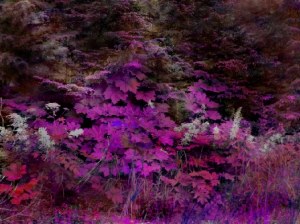
SCP-1009 is an anomalous land area measuring approximately 45 by 30 meters that actively converts and assimilates all foreign materials entering its boundaries. This irregularly-shaped zone expands continuously, transforming matter into an alien landscape while housing the corpse of an unidentified creature designated SCP-1009-A at its center.
The Expanding Territory: What is SCP-1009?
SCP-1009 represents one of the Foundation’s most insidious location-based anomalies—not because of immediate lethality, but due to its relentless, patient expansion. The affected area doesn’t simply corrupt or destroy materials that cross its threshold. Instead, it fundamentally restructures them at a molecular level, converting concrete, soil, vegetation, and even atmospheric particles into something entirely other.
The conversion process occurs gradually but irreversibly. Materials entering SCP-1009’s boundaries begin exhibiting altered physical properties within minutes. Organic matter takes on crystalline characteristics while maintaining biological structures. Inorganic substances develop what observers describe as “living” textures—metal that breathes, stone that pulses with rhythmic contractions. The resulting landscape defies conventional physics, creating an environment that appears simultaneously geological and biological.
The irregular shape of SCP-1009 suggests non-uniform expansion patterns. Rather than spreading in concentric circles, the anomaly extends preferentially along certain vectors, possibly influenced by underground geological features or the composition of surrounding materials. Foundation cartographers have documented expansion rates varying from 0.3 to 1.7 centimeters per day depending on directional heading and substrate composition.
SCP-1009-A: The Creature at the Heart
At the epicenter of the converted zone lies SCP-1009-A, the desiccated remains of a creature unlike any catalogued terrestrial organism. The corpse measures approximately 4 meters in length with a segmented body structure suggesting arthropod ancestry, yet possessing a skeletal framework more reminiscent of vertebrate evolution. Its exoskeleton displays the same converted properties as the surrounding terrain, making it impossible to determine whether the creature died before or after the anomaly manifested.
The positioning of SCP-1009-A raises critical questions about causality. Did this creature’s death trigger the anomalous conversion, or did it simply become the first victim of an expanding phenomenon? Xenobiological analysis reveals organ systems adapted for processing the converted materials found throughout SCP-1009, suggesting the creature may have evolved within—or for—this alien environment.
The most compelling theory positions SCP-1009-A as an invasive species from an alternate dimension or parallel ecosystem. The expanding zone represents not contamination but terraforming—an automated biological process designed to convert Earth’s environment into something habitable for creatures like SCP-1009-A. The fact that the specimen is deceased indicates either mission failure or the completion of a reproductive cycle, with the conversion zone serving as an incubation chamber for potential offspring.
Classification & Containment Strategy
SCP-1009 carries a Keter classification due to its unstoppable expansion and the impossibility of reversing converted materials. Unlike containable entities that can be locked in reinforced chambers, SCP-1009 actively consumes its own containment infrastructure, requiring constant reconstruction of perimeter barriers.
Current containment protocols focus on delay rather than prevention. The Foundation maintains a 200-meter exclusion zone around SCP-1009’s boundaries, with automated monitoring systems tracking expansion rates in real-time. Containment teams replace consumed barrier sections every 72 hours, using materials specifically selected for their slow conversion rates—primarily titanium alloys and carbon-fiber composites that resist transformation for 8-12 days longer than conventional construction materials.
The containment strategy acknowledges an uncomfortable truth: SCP-1009 cannot be stopped with current technology. Foundation resources instead prioritize studying the conversion mechanism to develop potential reversal methods while maintaining public ignorance of the anomaly’s existence. Cover stories attribute the exclusion zone to environmental contamination from industrial accidents, with amnestics administered to civilians who approach restricted perimeters.
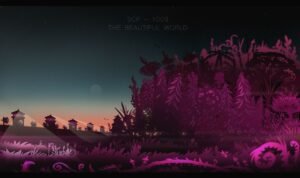
Document 1009-AIE-40 and Discovery Logs
The mysterious Document 1009-AIE-40 referenced in Foundation databases details the initial discovery event that brought SCP-1009 to organizational attention. In 1987, a rural farming community in [REDACTED] reported livestock disappearances and strange geological changes affecting approximately 15 square meters of pastureland. Local authorities dismissed initial reports as sinkholes until the affected area doubled in size over three weeks.
Foundation agents embedded in geological survey organizations intercepted civilian investigation requests and established preliminary containment. Early documentation reveals catastrophic misunderstanding of the anomaly’s nature—initial containment teams attempted to excavate the affected area, inadvertently spreading converted materials to equipment and personnel. Three researchers required emergency amputation after prolonged contact with SCP-1009 substrate caused irreversible tissue conversion.
Document 1009-AIE-40 specifically chronicles Interview Log 40 with the last surviving member of the original farming family, conducted before mandatory memory suppression. The witness described the affected land as “more beautiful than anything natural,” noting unusual coloration, impossible geometric patterns in the soil, and a pervasive sense of wrongness that attracted rather than repelled observation. This testimony provided the anomaly’s designation: “The Beautiful World.”
The Physics of Conversion: How Does It Work?
The conversion mechanism underlying SCP-1009 operates through principles that violate established thermodynamic laws. Materials entering the zone don’t simply change composition—they appear to exchange information with an external system, adopting properties inconsistent with their molecular structure. A steel beam retains metallic conductivity while developing cellular membranes. Soil maintains granular consistency while exhibiting coordinated movement patterns suggesting primitive cognition.
Spectrographic analysis reveals that converted materials emit radiation signatures matching no known elements on the periodic table. The wavelengths suggest matter existing in quantum states normally impossible under Earth’s physical constants, as if SCP-1009 operates under alternative universal laws. This supports the dimensional incursion theory—the zone represents a bubble of foreign physics gradually overwriting local reality.
Comparison with similar location-based anomalies like SCP-184 (The Architect) reveals key differences. While SCP-184 expands architectural spaces, SCP-1009 fundamentally alters matter itself. The boundary mechanics show particular sophistication—the conversion zone maintains a sharp demarcation line rather than a gradient transition. Materials either exist in converted or unconverted states with no intermediate phase, suggesting digital rather than analog transformation.
The expansion appears self-limiting in certain directions, halting completely when encountering specific geological formations—particularly limestone deposits exceeding 40% calcium carbonate concentration. This selectivity implies the conversion process requires specific chemical precursors or cannot process certain molecular bonds. Foundation researchers are investigating whether artificial limestone barriers could permanently contain the anomaly, though concerns remain about long-term effectiveness as SCP-1009 may eventually adapt its conversion algorithms.
“The Beautiful World”: Interpreting the Designation
The designation “The Beautiful World” carries profound irony within Foundation documentation. Surface interpretation suggests aesthetic appreciation—witnesses consistently describe the converted landscape as visually stunning, with crystalline structures refracting light into impossible colors and geometric patterns that human perception finds inherently pleasing. This beauty serves as memetic camouflage, making the anomaly attractive rather than repulsive to observers.
Deeper analysis reveals potential memetic properties in the designation itself. Personnel exposed to SCP-1009 for extended periods report intrusive thoughts describing the converted zone as “correct” or “improved” compared to normal reality. Some researchers have required psychological intervention after expressing desires to enter the zone voluntarily, describing unconverted Earth as “incomplete” or “broken.” These effects suggest SCP-1009 may exert subtle cognitive influence beyond its physical boundaries.
The name may also represent a literal translation from SCP-1009-A’s perspective. If the creature originated from an environment where the converted properties represent normal physics, then SCP-1009’s expansion constitutes genuine environmental restoration rather than contamination. From this viewpoint, Earth itself is the anomaly—a hostile, alien world requiring correction. The “beautiful world” is simply home.
Fan theories within the SCP research community propose connections to other anomalies referencing paradise or perfection, suggesting SCP-1009 may be one manifestation of a larger pattern—reality-altering phenomena that promise improvement while fundamentally destroying what they touch. This thematic resonance with concepts like “paradise lost” or “toxic beauty” elevates SCP-1009 beyond simple spatial anomaly into philosophical territory about the nature of improvement and the danger of alien perfection.
Frequently Asked Questions About SCP-1009
What happens if you enter SCP-1009?
Entering SCP-1009 results in gradual conversion of biological tissue following the same principles affecting inorganic matter. Subjects report initial euphoria and sensory enhancement before cellular structure begins transforming. The process is irreversible and ultimately fatal, though converted tissue remains animate for extended periods, suggesting the boundary between life and death becomes ambiguous within the zone.
Can SCP-1009’s expansion be stopped?
Current Foundation technology cannot halt SCP-1009’s growth, only delay it. Research focuses on understanding the conversion mechanism to develop potential reversal methods. The discovery that limestone formations slow expansion offers hope for containment solutions, though permanent cessation remains beyond current capabilities.
Is SCP-1009-A the source of the anomaly?
The relationship between SCP-1009-A and the expanding zone remains unclear. Evidence suggests the creature either triggered the conversion through its death or represents a failed colonization attempt from an alternate dimension. The converted environment matches the creature’s biological adaptations, supporting theories that SCP-1009 represents automated terraforming rather than random anomalous activity.
Why is SCP-1009 classified as Keter?
The Keter classification reflects SCP-1009’s unstoppable expansion and potential for catastrophic consequences if left unchecked. Unlike containable entities, SCP-1009 actively consumes containment infrastructure and cannot be neutralized through conventional means. The anomaly poses an existential threat to local ecosystems and potentially global stability if expansion accelerates.
Where is Document 1009-AIE-40 located?
Document 1009-AIE-40 exists within restricted Foundation archives, accessible only to personnel with Level 4 clearance or higher. The document contains interview logs and discovery reports from the initial containment event, including testimony from civilian witnesses before memory suppression. Its restricted status stems from memetic hazard concerns related to detailed descriptions of the converted landscape’s appearance.